


Optimizing AI Infrastructure and Database Subscriptions for 2026
- AI Image Generators Software AI Writing Assistant Popular Tools AI Tools
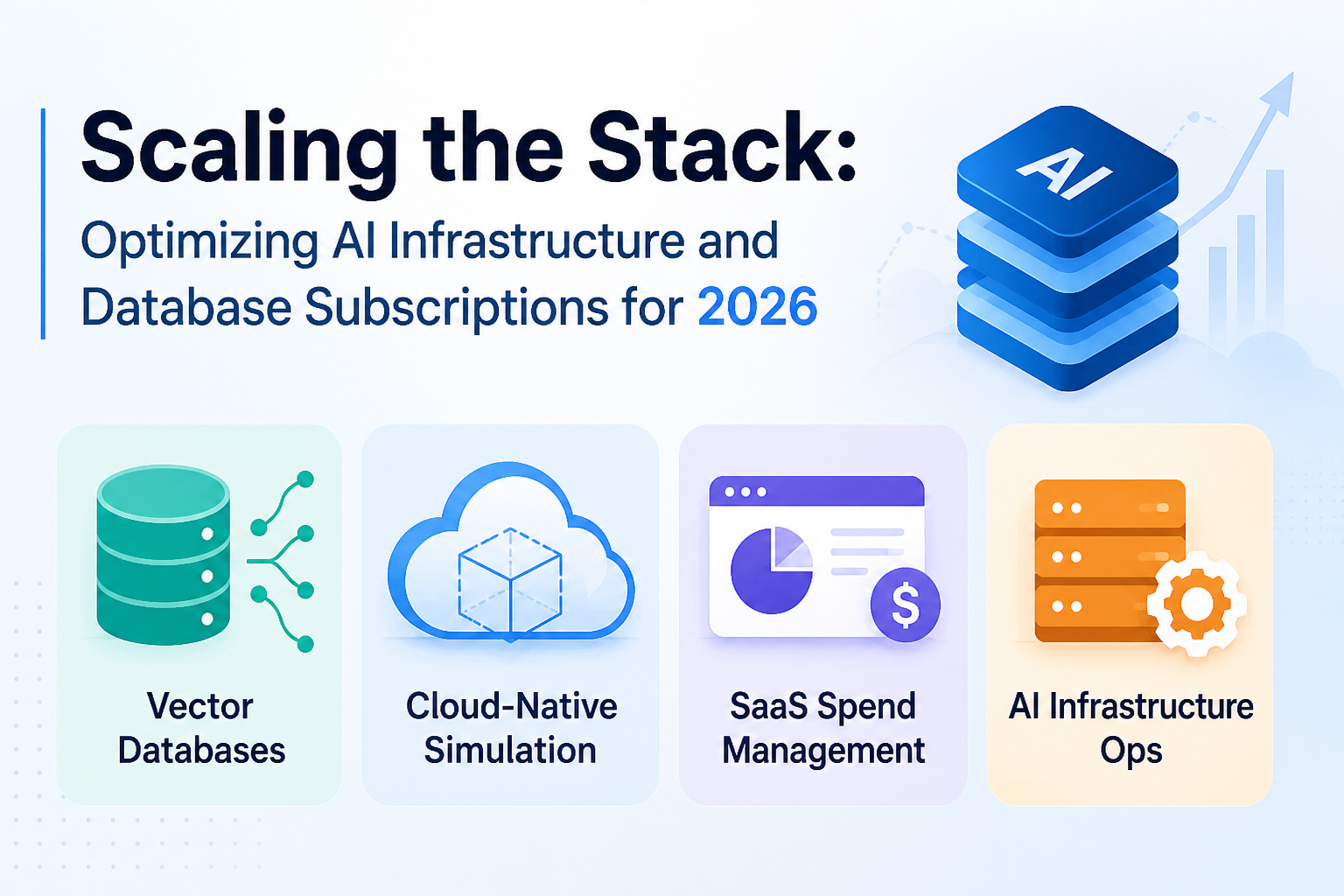
As AI features move from experiment to core product, the underlying infrastructure becomes the most complex part of a SaaS subscription stack. Teams are no longer testing isolated models. They are deploying production systems that require real-time data access, scalable compute, and reliable orchestration. This shift introduces a new problem. Fragmented tools create redundant costs, slow development, and increase operational risk.
In 2026, success depends on consolidating systems into unified environments. Instead of stacking multiple MLOps tools, companies are focusing on integrated platforms that connect data, compute, and deployment workflows. Platforms listed on Subscribed.fyi highlight this transition, especially in areas like Vector Databases, Cloud Native Simulation, SaaS Spend Management, and AI Infrastructure Ops. These categories represent the backbone of modern AI systems.
Understanding the shift toward unified AI infrastructure
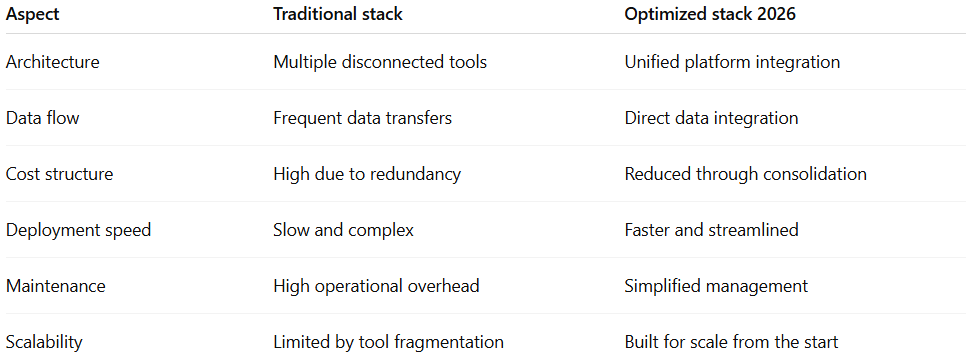
Traditional AI stacks were built in layers. One tool handled data ingestion. Another managed model training. A separate platform handled deployment and monitoring. While this approach worked for experimentation, it does not scale well for production.
Modern AI infrastructure focuses on reducing these layers. Instead of moving data between systems, teams integrate AI directly into existing data pipelines. This reduces latency, improves reliability, and eliminates unnecessary subscriptions.
Vector Databases are a clear example. Rather than exporting embeddings into separate systems, companies now store and query them within tightly integrated environments. This allows faster search, better personalization, and simpler architecture.
Cloud Native Simulation tools also play a growing role. These platforms allow teams to test AI systems in realistic environments before deployment. This reduces failure rates and improves system performance without adding separate testing stacks.
Key infrastructure categories shaping 2026
Vector databases as the foundation of AI retrieval
Vector Databases enable semantic search, recommendation systems, and retrieval augmented generation. They replace traditional keyword-based systems with similarity search, making AI applications more accurate and context-aware.
Instead of building custom pipelines, teams can use integrated database solutions that support embeddings natively. This reduces engineering overhead and avoids duplication across services.
Cloud native simulation for safer deployment
Cloud Native Simulation allows teams to simulate real world scenarios before launching AI features. This is especially important for applications that interact with users, financial systems, or automation workflows.
By testing AI behavior in controlled environments, companies can identify issues early and avoid costly production failures.
SaaS spend management for cost control
As AI stacks grow, so do subscription costs. Many companies pay for overlapping tools without realizing it. SaaS Spend Management platforms provide visibility into usage, helping teams eliminate redundant subscriptions.
This is critical when consolidating AI infrastructure. Removing unnecessary tools not only reduces costs but also simplifies operations.
AI infrastructure ops for scalability
AI Infrastructure Ops platforms handle deployment, monitoring, and scaling of AI systems. They replace fragmented MLOps tools with unified solutions that manage the entire lifecycle.
These platforms ensure that AI systems remain reliable under heavy workloads while maintaining performance and cost efficiency.
Comparison of traditional vs optimized AI stack
Real use cases of optimized AI infrastructure
A SaaS company building a customer support chatbot previously used separate tools for embeddings, storage, and search. By switching to an integrated Vector Database, they reduced latency and removed two external services. This improved response time and cut infrastructure costs.
Another example involves a fintech platform using Cloud Native Simulation to test fraud detection models. Instead of deploying directly to production, they simulated thousands of transaction scenarios. This reduced false positives and improved trust in the system.
A startup managing multiple AI subscriptions used a SaaS Spend Management platform to audit costs. They discovered overlapping tools for monitoring and deployment. After consolidation, they reduced expenses by over thirty percent without affecting performance.
Large enterprises are also adopting AI Infrastructure Ops platforms to manage scaling. Instead of relying on multiple MLOps tools, they use a single system to handle deployment, monitoring, and updates. This improves reliability and reduces operational complexity.
Conclusion
Scaling AI systems in 2026 requires a shift in mindset. Instead of stacking tools, companies need to build cohesive infrastructure that connects data, compute, and deployment. Categories like Vector Databases, Cloud Native Simulation, SaaS Spend Management, and AI Infrastructure Ops provide the foundation for this transformation.
Using platforms listed on Subscribed.fyi, teams can reduce redundancy, optimize costs, and improve performance. The result is a more efficient, scalable, and reliable AI stack that supports long-term growth.
Relevant links