Project management tools like , Notion, Basecamp, Lark, Slack, Asana and Trello.
AI chatbot tools like ChatGPT, Grok, Perplexity, Claude, Gemini and Copilot.
Marketing analytics platforms like Google Analytics, Similarweb and Semrush.
CRM systems like HubSpot, Apollo.io Pipedrive, Zoho CRM, and Salesforce.
VPNs, SSO providers, and password managers like NordVPN, Okta, and LastPass.
Email marketing and campaign tools like MailerLite, Instantly, and Mailchimp.
Website builders, hosting tools like Hostinger, Webflow, Framer, and Shopify
HR and recruiting software like ATS platforms, BambooHR, Workday, and Lever.
Automate finances with confidence like Quickbooks, Stripe, Brex, and Mercury.
Design and editing tools like Figma, Canva, Adobe Creative Cloud, CapCut.
Workflow automation tools like Zapier, Make, Clay, and Reclaim.ai.
No-code and AI-native dev tools like Cursor, Windsurf, Lovable and Bubble.
Chat to find tools, compare options,
Discover the best-performing
In today's fast-paced business landscape, DevOps solutions are revolutionizing the way companies across all industries operate, enhancing efficiency, and driving growth. By leveraging DevOps tools, businesses of all sizes – from small startups to medium and enterprise-level organizations – can...
In today's fast-paced business landscape, DevOps solutions are revolutionizing the way companies across all industries operate, enhancing efficiency, and driving growth. By leveraging DevOps tools, businesses of all sizes – from small startups to medium and enterprise-level organizations – can streamline their software development and deployment processes. These innovative DevOps products offer a myriad of benefits, including automated workflows, scalable infrastructure, and seamless integration with existing systems, ensuring ease of use and maximum productivity.
With features such as continuous integration (CI), continuous delivery (CD), and infrastructure as code (IaC), DevOps tools enable faster time-to-market, reduced operational costs, and improved customer satisfaction. Whether you are looking to optimize website performance, enhance collaboration between development and operations teams, or ensure reliable and secure service delivery, DevOps solutions provide the necessary framework to achieve these goals.
Our range of DevOps tools and SaaS software is designed to cater to the diverse needs of businesses, promoting unified communication, innovation, and rapid problem resolution. By adopting these business solutions, you can scale your operations seamlessly, respond swiftly to customer feedback, and maintain high-quality software delivery. Discover how our DevOps products can transform your business operations and propel your growth in a competitive market.


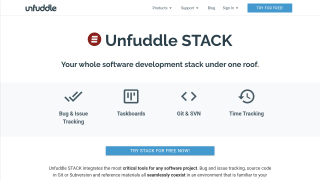
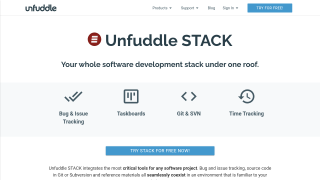
Unfuddle STACK is an integrated DevOps solution that streamlines software project management by combining bug tracking, issue management, Git/Subversion source control, and reference materials. Designed for team collaboration, it provides a seamless environment for efficient workflow and project oversight. Ideal for developers, it simplifies critical processes, enhancing productivity and organization.
DevOps is a software development methodology that combines development (Dev) and operations (Ops) to enhance the efficiency, speed, and security of software development and delivery. This approach brings together development and operations teams to conceive, build, and deliver secure software quickly. DevOps software solutions focus on automation, collaboration, fast feedback, and iterative improvement, stemming from an Agile approach to software development. The primary purpose of DevOps is to reduce the time between committing a change to a system and the change being placed into normal production, while ensuring high quality and security standards.
DevOps is a comprehensive category of software that has far-reaching applications across various industries. It addresses common business challenges such as slow deployment times, poor communication between teams, and low product quality. By fostering enhanced collaboration between development and operations teams, DevOps solutions improve operational efficiency, accelerate the delivery of features, and ensure higher product quality. Key benefits include increased efficiency through automation, continuous improvement via feedback loops, and higher quality and security through practices like continuous integration and delivery (CI/CD). DevOps helps businesses save money by reducing bottlenecks, fast-tracking release timelines, and improving product quality by up to 61% and deployment frequency by up to 49%.
DevOps software is utilized by a wide range of businesses and professionals. Small businesses benefit from DevOps by streamlining their development and deployment processes, allowing for faster and more reliable software updates. Medium and large enterprises leverage DevOps to enhance their operational support, reduce production costs, and improve customer satisfaction through frequent and high-quality releases. Industry-specific roles such as software developers, system administrators, and IT teams also heavily rely on DevOps to automate tasks, ensure continuous delivery, and maintain high security standards. Additionally, DevOps is crucial for businesses migrating applications to the cloud, enabling scalability and cost savings.
The key elements of DevOps software include several core functionalities and features. These include Enhanced Collaboration: Breaking down silos between development and operations teams to foster better communication and teamwork. Automation: Automating the software development lifecycle to reduce manual tasks, minimize errors, and accelerate delivery times. Continuous Integration and Delivery (CI/CD): Ensuring that each code change is thoroughly tested and quickly deployed. Continuous Monitoring and Real-Time Insights: Using tools to provide real-time feedback on system performance and user interactions. Improved Product Quality: Gathering feedback frequently and testing throughout development to deliver high-quality features. Enhanced Security and Compliance: Integrating security practices throughout the development lifecycle to prioritize security from the start. Streamlined Resource Management: Optimizing processes and cutting out repetitive tasks to make better use of resources. These features collectively enable faster deployment, quick issue resolution, and increased agility and flexibility.