Project management tools like , Notion, Basecamp, Lark, Slack, Asana and Trello.
AI chatbot tools like ChatGPT, Grok, Perplexity, Claude, Gemini and Copilot.
Marketing analytics platforms like Google Analytics, Similarweb and Semrush.
CRM systems like HubSpot, Apollo.io Pipedrive, Zoho CRM, and Salesforce.
VPNs, SSO providers, and password managers like NordVPN, Okta, and LastPass.
Email marketing and campaign tools like MailerLite, Instantly, and Mailchimp.
Website builders, hosting tools like Hostinger, Webflow, Framer, and Shopify
HR and recruiting software like ATS platforms, BambooHR, Workday, and Lever.
Automate finances with confidence like Quickbooks, Stripe, Brex, and Mercury.
Design and editing tools like Figma, Canva, Adobe Creative Cloud, CapCut.
Workflow automation tools like Zapier, Make, Clay, and Reclaim.ai.
No-code and AI-native dev tools like Cursor, Windsurf, Lovable and Bubble.
Chat to find tools, compare options,
Discover the best-performing
Curated and listed by Subscribed Team
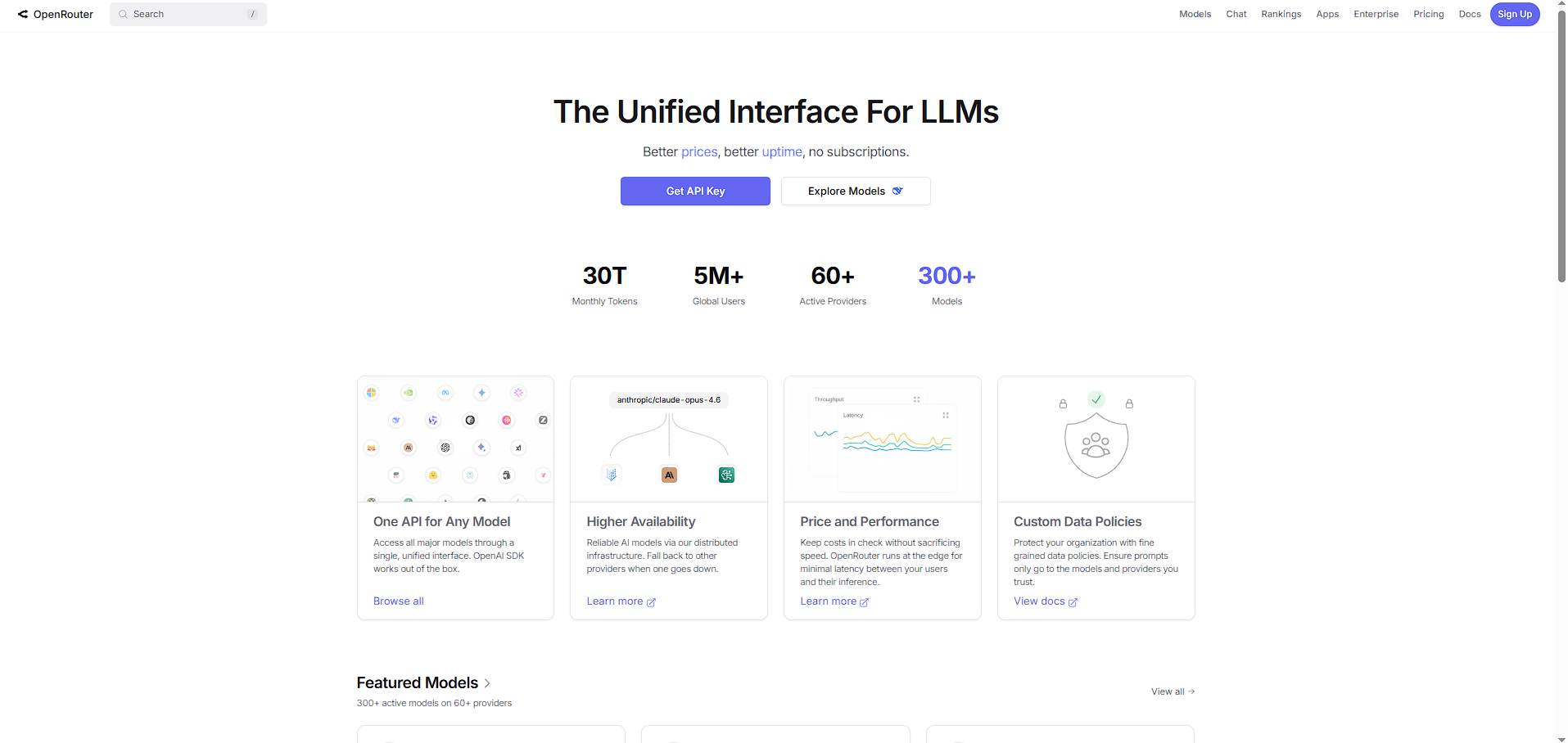
OpenRouter is an AI infrastructure platform designed to simplify how developers interact with large language models. Instead of integrating separately with providers like OpenAI, Anthropic, or others, OpenRouter acts as a single gateway that aggregates access to many models under one API. This reduces integration complexity and accelerates development workflows.
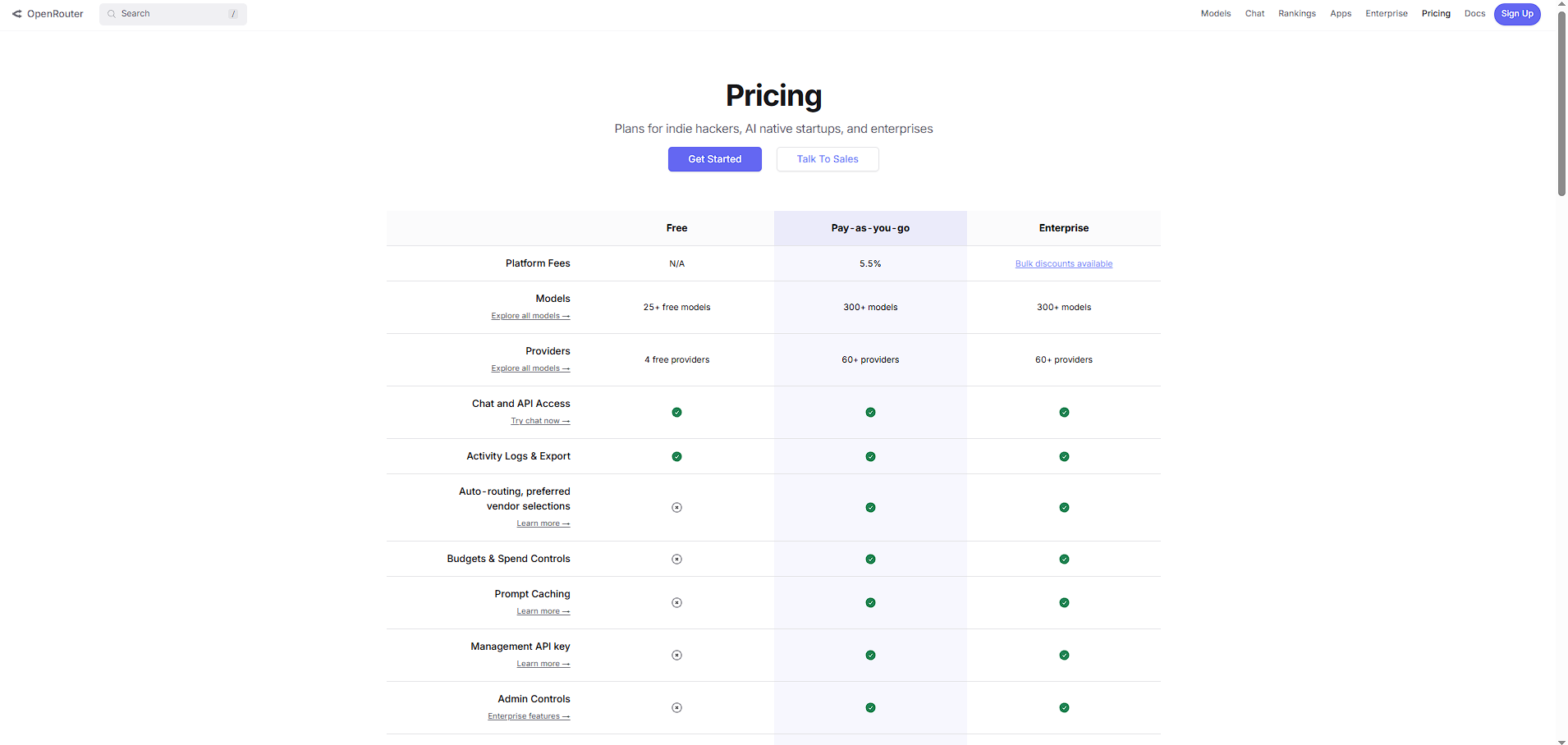
The platform is particularly useful for teams experimenting with different models or optimizing for cost and performance. Developers can route requests dynamically, choosing the best model for each task based on pricing, speed, or output quality. This flexibility allows applications to remain adaptive as the AI landscape evolves.
Positioned as a developer-first tool, OpenRouter focuses on interoperability, transparency, and control. It is commonly used in AI apps, SaaS tools, and backend systems where model switching, redundancy, and cost optimization are critical.
Key Features and Benefits
Who Can Benefit from OpenRouter
Looking for alternative solutions?
If you are evaluating similar tools, alternatives include direct integrations with ChatGPT or Anthropic. Each offers different levels of control, abstraction, and pricing transparency.
OpenRouter is an AI infrastructure platform designed to simplify how developers interact with large language models. Instead of integrating separately with providers like OpenAI, Anthropic, or others, OpenRouter acts as a single gateway that aggregates access to many models under one API. This reduces integration complexity and accelerates development workflows.
The platform is particularly useful for teams experimenting with different models or optimizing for cost and performance. Developers can route requests dynamically, choosing the best model for each task based on pricing, speed, or output quality. This flexibility allows applications to remain adaptive as the AI landscape evolves.
Positioned as a developer-first tool, OpenRouter focuses on interoperability, transparency, and control. It is commonly used in AI apps, SaaS tools, and backend systems where model switching, redundancy, and cost optimization are critical.
Key Features and Benefits
Who Can Benefit from OpenRouter
Looking for alternative solutions?
If you are evaluating similar tools, alternatives include direct integrations with ChatGPT or Anthropic. Each offers different levels of control, abstraction, and pricing transparency.
Learn what people say about OpenRouter
Be the first to share your experience and help others in the community.
OpenRouter is an AI infrastructure platform designed to simplify how developers interact with large language models. Instead of integrating separately with providers like OpenAI, Anthropic, or others, OpenRouter acts as a single gateway that aggregates access to many models under one API. This reduces integration complexity and accelerates development workflows.
The platform is particularly useful for teams experimenting with different models or optimizing for cost and performance. Developers can route requests dynamically, choosing the best model for each task based on pricing, speed, or output quality. This flexibility allows applications to remain adaptive as the AI landscape evolves.
Positioned as a developer-first tool, OpenRouter focuses on interoperability, transparency, and control. It is commonly used in AI apps, SaaS tools, and backend systems where model switching, redundancy, and cost optimization are critical.
Key Features and Benefits
Who Can Benefit from OpenRouter
Looking for alternative solutions?
If you are evaluating similar tools, alternatives include direct integrations with ChatGPT or Anthropic. Each offers different levels of control, abstraction, and pricing transparency.