Project management tools like , Notion, Basecamp, Lark, Slack, Asana and Trello.
AI chatbot tools like ChatGPT, Grok, Perplexity, Claude, Gemini and Copilot.
Marketing analytics platforms like Google Analytics, Similarweb and Semrush.
CRM systems like HubSpot, Apollo.io Pipedrive, Zoho CRM, and Salesforce.
VPNs, SSO providers, and password managers like NordVPN, Okta, and LastPass.
Email marketing and campaign tools like MailerLite, Instantly, and Mailchimp.
Website builders, hosting tools like Hostinger, Webflow, Framer, and Shopify
HR and recruiting software like ATS platforms, BambooHR, Workday, and Lever.
Automate finances with confidence like Quickbooks, Stripe, Brex, and Mercury.
Design and editing tools like Figma, Canva, Adobe Creative Cloud, CapCut.
Workflow automation tools like Zapier, Make, Clay, and Reclaim.ai.
No-code and AI-native dev tools like Cursor, Windsurf, Lovable and Bubble.

Chat to find tools, compare options,

Discover the best-performing
Manage profile with subsig, and
unlock 23+ social and review monitoring. Get partnership options with
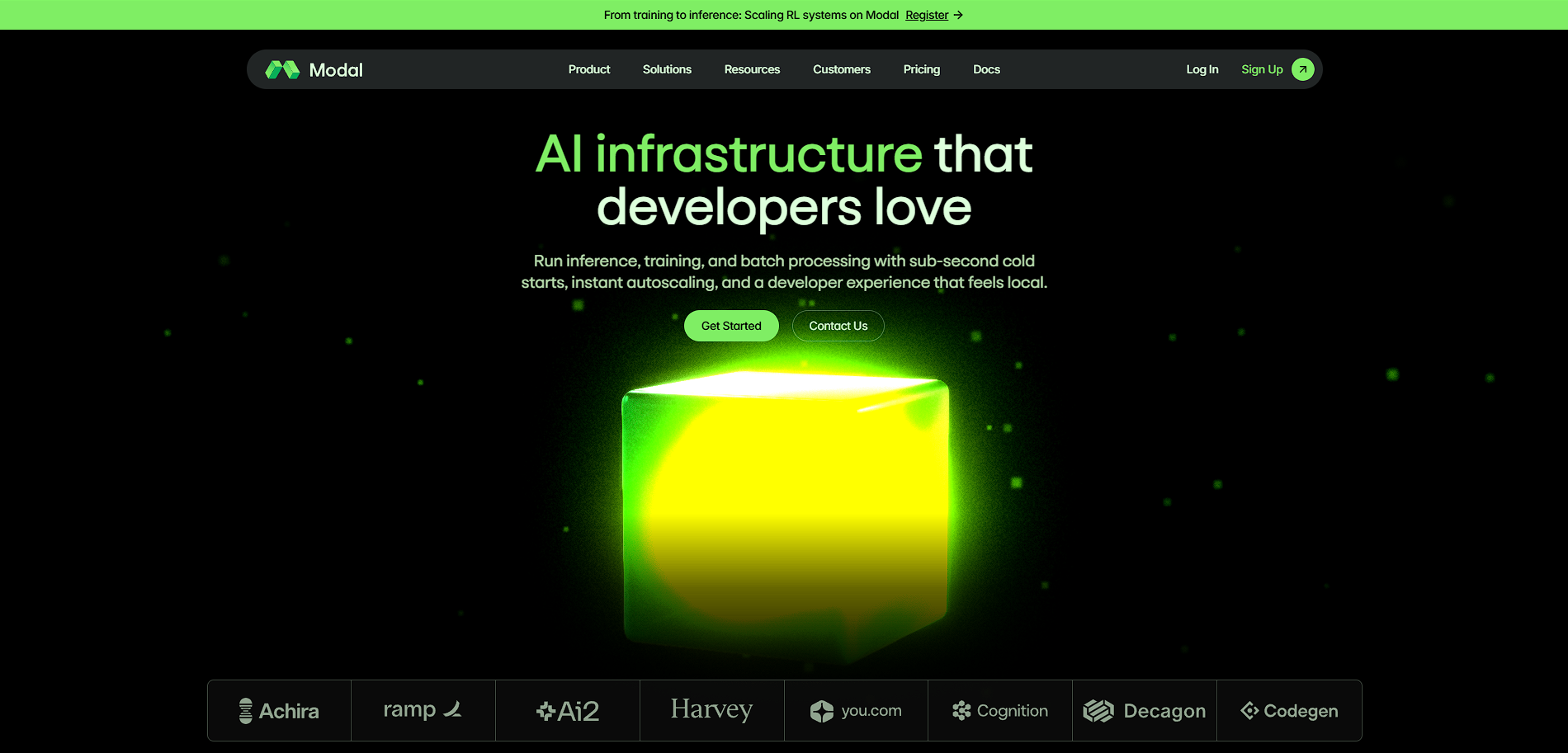
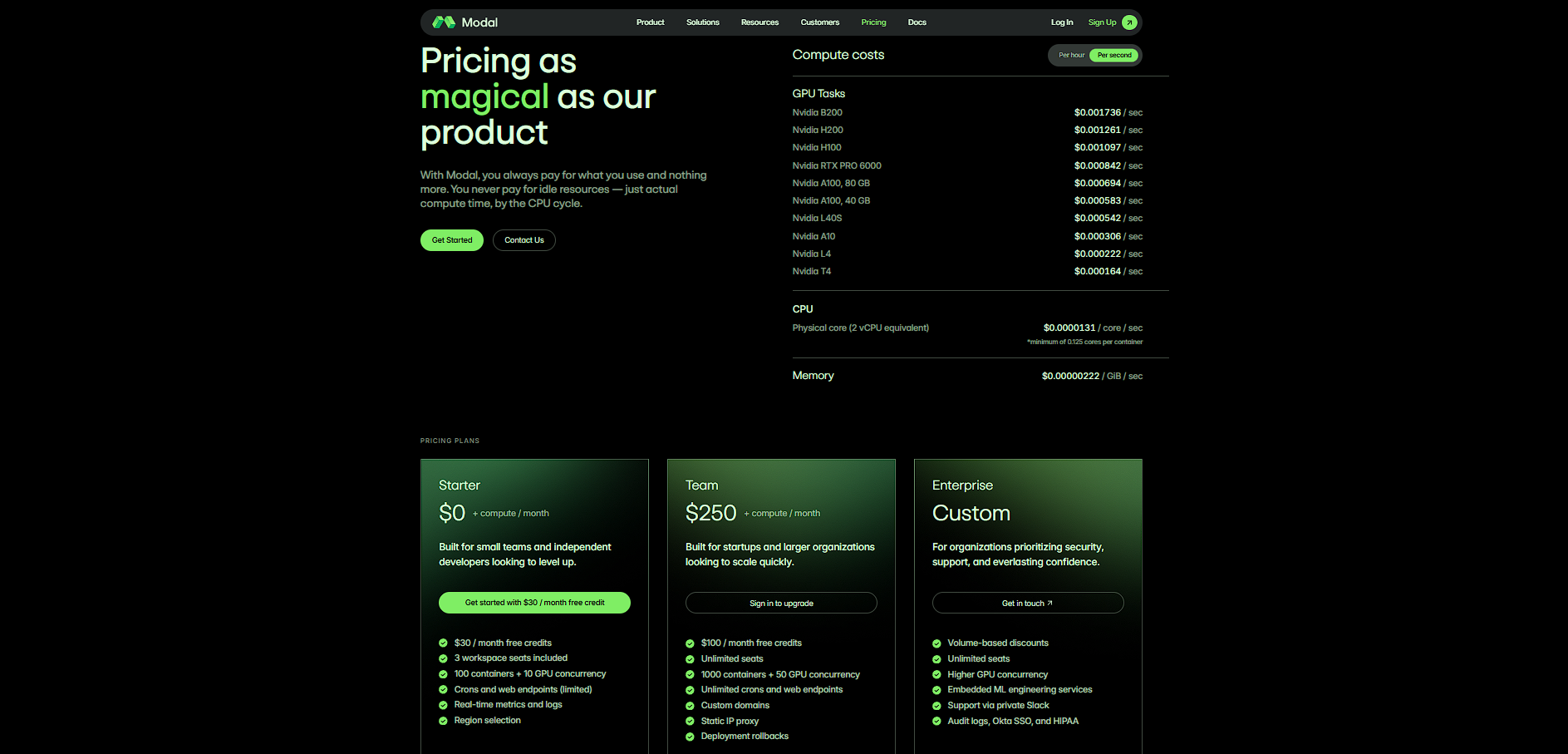
Modal is a serverless cloud platform built specifically for AI, machine learning, and data-intensive workloads. It enables developers to run code on powerful CPUs and GPUs without configuring infrastructure, allowing them to focus entirely on building and deploying applications.
The platform is designed around a code-first approach where developers define compute environments, dependencies, and scaling behavior directly in Python. Modal automatically provisions resources, scales workloads, and manages execution, making it possible to run anything from simple inference APIs to large-scale distributed training jobs.
Positioned as a modern alternative to traditional cloud services like AWS or GCP, Modal focuses on developer speed and simplicity. It is commonly used for LLM inference, batch processing, AI agents, and research workloads where rapid scaling and high-performance compute are essential.
Key Features and Benefits
Who Can Benefit from Modal
Looking for alternative solutions?
Alternatives include Render, Netlify, AWS Elastic Beanstalk, and platforms like Baseten or RunPod for GPU-based AI workloads.
Modal is a serverless cloud platform built specifically for AI, machine learning, and data-intensive workloads. It enables developers to run code on powerful CPUs and GPUs without configuring infrastructure, allowing them to focus entirely on building and deploying applications.
The platform is designed around a code-first approach where developers define compute environments, dependencies, and scaling behavior directly in Python. Modal automatically provisions resources, scales workloads, and manages execution, making it possible to run anything from simple inference APIs to large-scale distributed training jobs.
Positioned as a modern alternative to traditional cloud services like AWS or GCP, Modal focuses on developer speed and simplicity. It is commonly used for LLM inference, batch processing, AI agents, and research workloads where rapid scaling and high-performance compute are essential.
Key Features and Benefits
Who Can Benefit from Modal
Looking for alternative solutions?
Alternatives include Render, Netlify, AWS Elastic Beanstalk, and platforms like Baseten or RunPod for GPU-based AI workloads.
Learn what people say about Modal
Modal is a serverless cloud platform built specifically for AI, machine learning, and data-intensive workloads. It enables developers to run code on powerful CPUs and GPUs without configuring infrastructure, allowing them to focus entirely on building and deploying applications.
The platform is designed around a code-first approach where developers define compute environments, dependencies, and scaling behavior directly in Python. Modal automatically provisions resources, scales workloads, and manages execution, making it possible to run anything from simple inference APIs to large-scale distributed training jobs.
Positioned as a modern alternative to traditional cloud services like AWS or GCP, Modal focuses on developer speed and simplicity. It is commonly used for LLM inference, batch processing, AI agents, and research workloads where rapid scaling and high-performance compute are essential.
Key Features and Benefits
Who Can Benefit from Modal
Looking for alternative solutions?
Alternatives include Render, Netlify, AWS Elastic Beanstalk, and platforms like Baseten or RunPod for GPU-based AI workloads.
Want to list your product on Subscribed.fyi? Create a profile to reach more buyers.