
SaaS Price Hikes: Negotiation Tactics for Modern Procurement
- Expense Management Software Credit Cards Investing Business Solutions
SaaS spending is getting harder to predict. Many vendors are moving from fixed subscriptions to usage-based billing, AI add-ons, seat expansions, and premium automation tiers. What once looked affordable can quickly become a budget problem at renewal time.
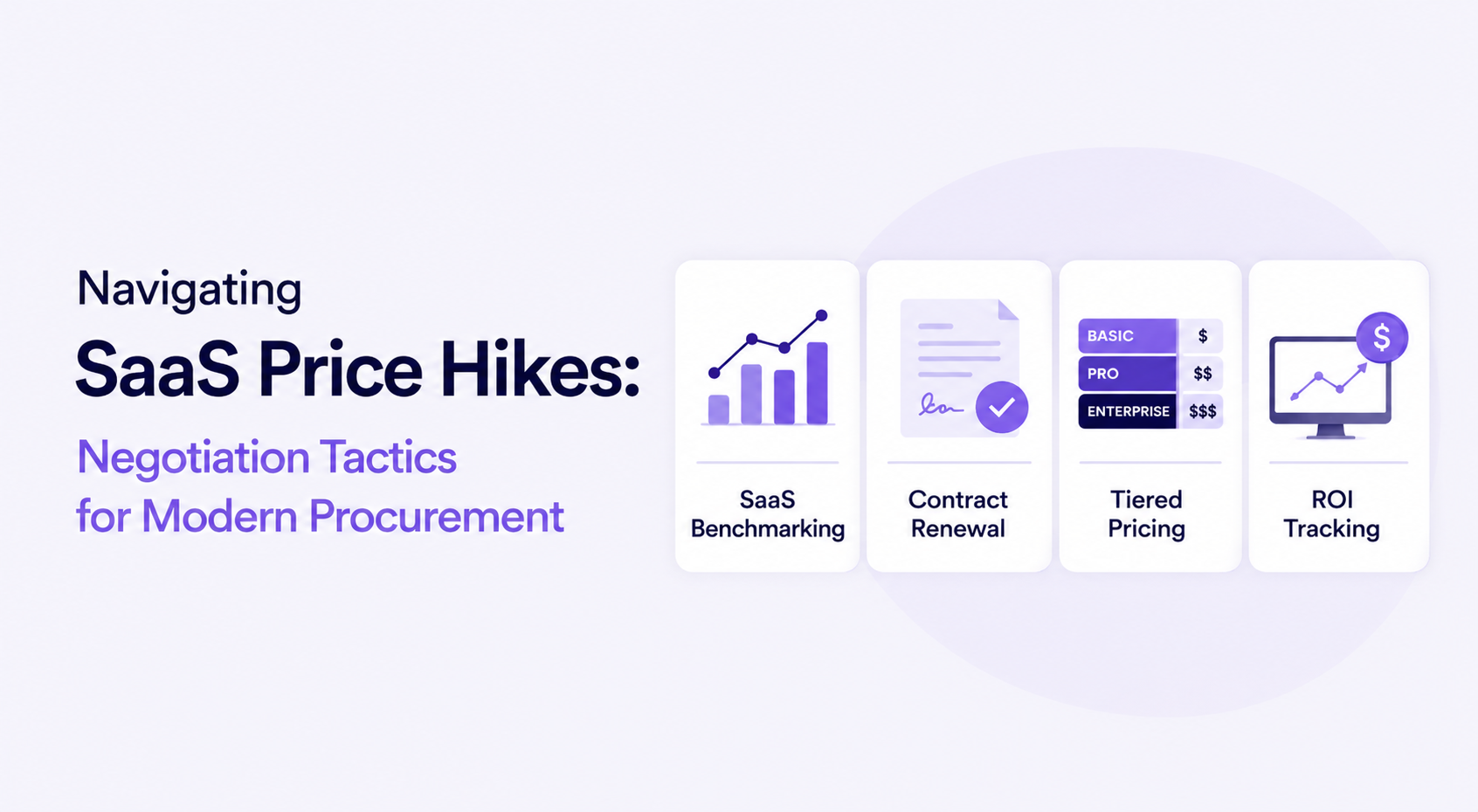
Modern procurement teams need better leverage than simply asking for a discount. They need pricing intelligence, usage visibility, contract timing, and measurable ROI data. That is where Subscribed.fyi becomes valuable. Businesses can use it for SaaS Benchmarking, Contract Renewal, Tiered Pricing, and ROI Tracking to negotiate from a position of strength instead of guesswork.
Why SaaS price hikes are increasing
Vendors are under pressure to grow revenue without relying only on new customer acquisition. That often leads to:
- Annual price increases hidden in renewals
- AI feature bundles added to base plans
- Usage fees for storage, API calls, or automation
- Mandatory upgrades to higher tiers
- Reduced discounts for monthly contracts
For buyers, this creates unpredictable spend. A tool that cost $12,000 last year may become $18,000 after seat growth and new pricing logic.
Use SaaS benchmarking before the negotiation starts
Many companies negotiate too late. They only react when the renewal quote arrives. Better teams benchmark pricing months in advance.
With SaaS Benchmarking, procurement leaders can compare categories, alternatives, and market positioning before speaking with the vendor. This helps answer:
- Are we paying above market rates?
- Are similar tools offering better features?
- Is our current plan oversized?
- Should we consolidate vendors?
If a supplier knows you understand the market, pricing conversations become more balanced.
Audit for zombie subscriptions first
Before asking finance for a bigger software budget, remove waste.
Zombie subscriptions are tools still being paid for but barely used. Common examples include:
- Legacy project tools after migration
- Duplicate CRM add-ons
- Old analytics platforms
- Extra user seats from churned staff
- Experimental AI tools never adopted
Reclaiming that spend can fund higher-value tools without increasing total software cost.
For example, a company cancels three low-usage apps worth $9,000 annually and reallocates that budget to a revenue-driving customer success platform.
Negotiate contract renewal with real data
When renewal arrives, avoid emotional conversations. Use numbers.
Contract Renewal planning should include:
- Actual active users vs paid seats
- Feature adoption rates
- Business outcomes delivered
- Competitive alternatives
- Budget caps for the next term
If only 62 of 100 seats are active, ask for a lower committed seat count. If premium features were unused, request removal. If adoption is growing, ask for phased pricing instead of an immediate jump.
Vendors respond better when requests are tied to usage evidence.
Compare tiered pricing models carefully
Tiered pricing can look attractive while hiding expensive triggers.
Examples include:
- Low base plan with costly overages
- AI assistant sold per user
- Reporting features locked behind enterprise tier
- API access billed separately
Use Tiered Pricing comparisons to model what happens if your team grows 20 percent or usage doubles.
A cheap entry plan may become the most expensive option six months later.
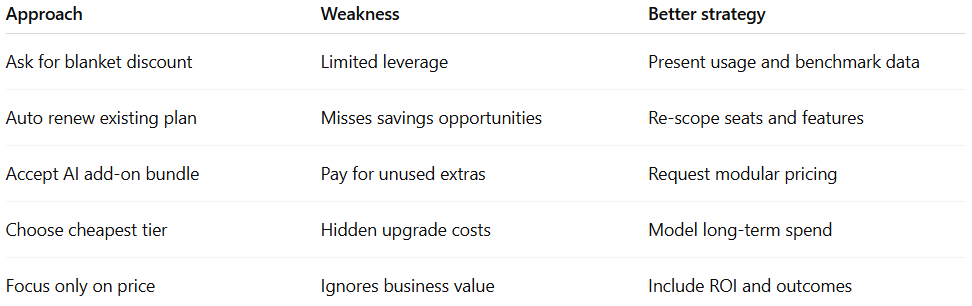
Comparison of common negotiation approaches
Track ROI so every tool earns its budget
Cost control matters, but growth impact matters more.
Use ROI Tracking to connect software spend with outcomes such as:
- Faster sales cycles
- Lower support volume
- Higher retention
- Time saved through automation
- Increased pipeline generation
A tool that costs more but drives measurable revenue may deserve expansion. A cheaper tool with no adoption may need removal.
That mindset changes procurement from cost center to growth partner.
Real use case for a mid-size company
A 250-person business receives a 22 percent renewal increase from a collaboration vendor.
Instead of accepting it, procurement reviews seat usage, benchmarks alternatives, and checks feature adoption.
Findings:
- 18 percent inactive users
- Two premium modules unused
- Comparable vendors priced lower
- Contract signed during prior year-end rush
Outcome:
- Reduced seats
- Removed unused modules
- Secured two-year rate protection
- Redirected savings into sales intelligence software
Total net savings improved software efficiency instead of simply cutting tools.
Conclusion
SaaS price hikes are now part of normal vendor strategy, especially with AI premiums and usage-based billing. The best response is not reactive cost cutting. It is disciplined negotiation backed by market data, clean usage insights, and ROI proof.
Subscribed.fyi helps teams do exactly that through SaaS Benchmarking, Contract Renewal, Tiered Pricing, and ROI Tracking. By removing zombie subscriptions and reinvesting budget into tools that drive measurable growth, procurement becomes smarter, faster, and more strategic.
Relevant links