
Vibe Coding and Natural Language Programming Trends
- AI Image Generators Software AI Writing Assistant Popular Tools AI Tools
The Rise of Vibe Coding: How Natural Language is Replacing Syntax
The way we build software is changing fast. What once required deep knowledge of syntax, frameworks, and architecture is now shifting toward something more intuitive. This new approach is called Vibe Coding, and it is powered by Natural Language Programming.
Instead of writing rigid lines of code, developers can now describe what they want in plain English and let AI systems generate the logic, structure, and implementation. Platforms like Subscribed.fyi highlight emerging tools such as Lovable, which are leading this transformation by enabling conversational development workflows.
This article explores how Vibe Coding works, how agentic IDEs are redefining development, and which tools are best suited for rapid prototyping versus enterprise production systems.
What is vibe coding
Vibe Coding is a development approach where coding becomes a dialogue rather than a manual process. Developers describe features, flows, or outcomes in natural language, and AI translates those instructions into working code.
This is made possible by advances in large language models and agent-based systems. These systems do not just autocomplete code. They understand intent, plan architecture, and execute multi-step development tasks.
Instead of thinking about syntax, developers focus on outcomes. For example:
- Traditional approach: Write functions, define APIs, handle state manually
- Vibe Coding approach: “Build a login system with email authentication and error handling.”
The AI interprets the request and generates the full implementation.
How natural language programming is changing development
Natural Language Programming removes the barrier between idea and execution. It allows both technical and non-technical users to build software faster.
Key shifts include:
- From syntax to intent
- From manual coding to guided generation
- From single tools to agentic systems that collaborate
This approach reduces cognitive load and accelerates development cycles. It also opens software creation to a broader audience.
However, it introduces new challenges. Developers must now validate AI outputs, manage context, and ensure code quality at scale.
The role of agentic ideas in vibe coding
Agentic IDEs are the backbone of Vibe Coding. These environments go beyond simple code editors. They act as intelligent collaborators.
They can:
- Plan multi-step workflows
- Generate full features from prompts
- Debug and refactor code
- Integrate APIs and services automatically
Tools featured on Subscribed.fyi, including Lovable, are designed with this agentic approach. They allow developers to describe complex systems while the AI handles architecture and execution.
This changes the developer role from coder to orchestrator.
Best tools for rapid prototyping versus production
Not all Vibe Coding tools are created equal. Some excel at speed and experimentation, while others focus on reliability and scalability.
Here is a comparison of key tool categories:
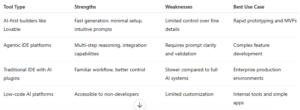
For startups and early-stage projects, tools like Lovable provide unmatched speed. For enterprise systems, a hybrid approach combining AI assistance with traditional engineering practices is more reliable.
Real-world use cases of vibe coding
Vibe Coding is already being used across industries.
Startup product development
Founders can build MVPs without large engineering teams. A single person can describe features and launch a working product in days.
Internal automation tools
Businesses use Natural Language Programming to create dashboards, workflows, and integrations without heavy development overhead.
Customer experience platforms
AI-generated systems can quickly adapt to user needs, enabling faster iteration of chatbots, recommendation engines, and support tools.
Marketing technology stacks
Marketers can build data pipelines and automation workflows by describing goals instead of writing scripts.
These use cases show how Vibe Coding reduces time to market while increasing flexibility.
Challenges and limitations to consider
Despite its advantages, Vibe Coding is not without risks.
- AI-generated code may lack optimization
- Security vulnerabilities can be overlooked
- Large systems require human oversight
- Debugging AI-generated logic can be complex
For production environments, governance and validation processes are essential. Developers must review outputs, enforce standards, and maintain documentation.
The future of coding as a conversation
Vibe Coding represents a fundamental shift in how software is built. It does not eliminate developers but changes their role.
Developers become:
- System designers
- Prompt engineers
- Quality controllers
As tools evolve, the line between human intent and machine execution will continue to blur.
Platforms like Subscribed.fyi are already curating the ecosystem of tools such as Lovable that make Natural Language Programming accessible and scalable.
The future is not about writing better syntax. It is about expressing better ideas.
Conclusion
The rise of Vibe Coding signals a new era where development is driven by conversation. With tools like Lovable featured on Subscribed.fyi, developers can move faster from concept to execution using Natural Language Programming.
For rapid prototyping, AI-first tools provide unmatched speed and flexibility. For enterprise-grade systems, combining agentic IDEs with traditional practices ensures stability and control.
As this paradigm matures, the ability to clearly communicate intent will become the most valuable skill in software development.
Site-related links