
Auditing Usage-Based Pricing and AI Add-ons
- Expense Management Software Credit Cards Investing Business Solutions
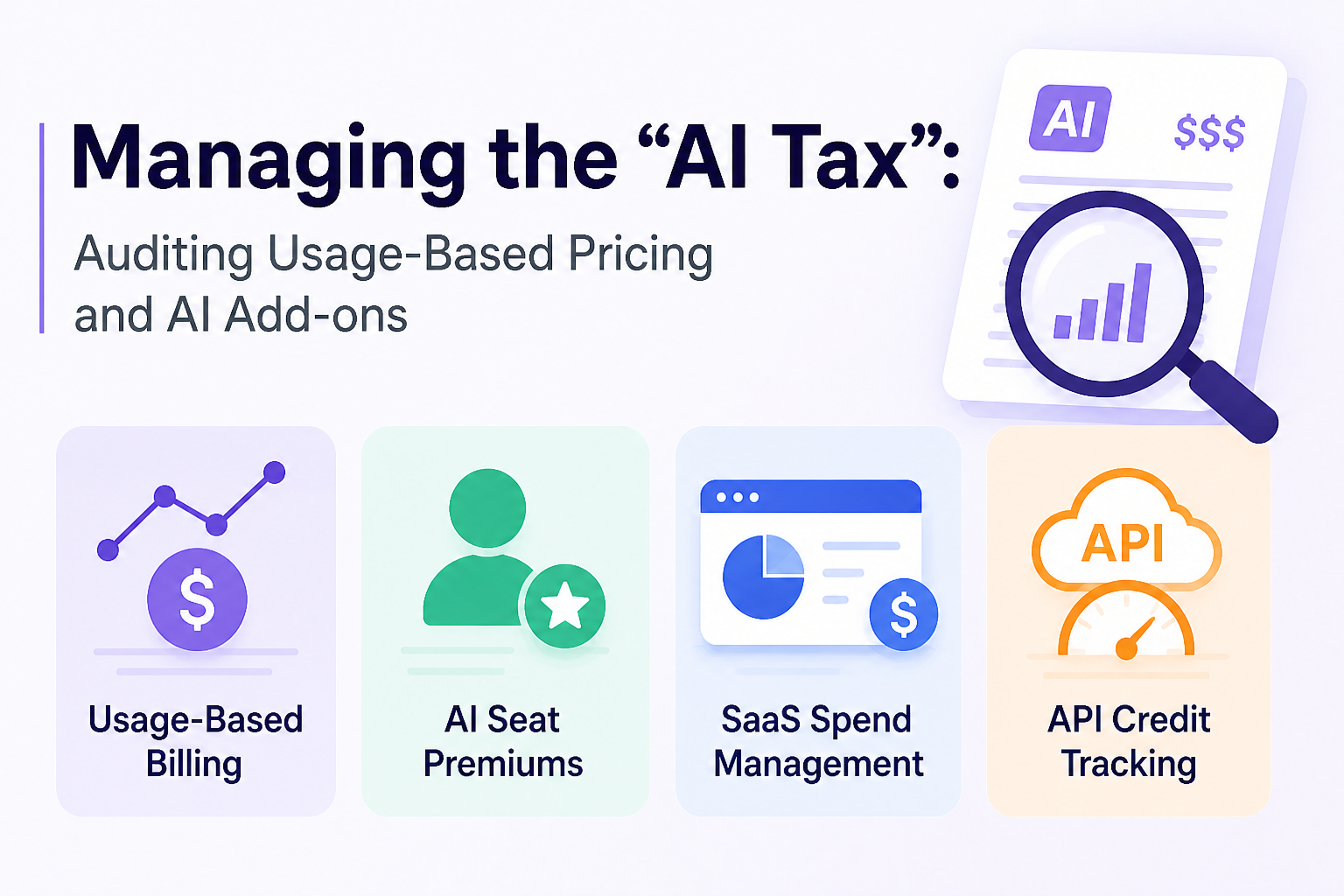
Most SaaS vendors now bundle AI into their products, but the pricing model has shifted. Instead of flat subscriptions, companies face Usage-Based Billing tied to tokens, API calls, or AI feature access. This creates an invisible cost layer that grows over time. Many teams only notice the impact when monthly invoices spike without clear usage visibility.
Tools like Subscribed.fyi help solve this problem by centralizing SaaS Spend Management and surfacing hidden costs. By combining benchmarking data with API Credit Tracking, teams can audit their stack and align spending with real business value instead of guesswork.
Understanding the rise of AI add-on pricing
AI add-ons are often marketed as productivity boosters, but they introduce fragmented pricing structures. A single SaaS platform may charge separately for seats, AI usage, and premium features. AI Seat Premiums are especially common, where users pay extra per employee just to unlock AI capabilities.
This layered pricing creates what many teams call the AI tax. It includes unused features, duplicate tools, and background processes that consume credits without direct ROI. Without tracking mechanisms, companies end up paying for Ghost AI subscriptions that no one actively uses.
How to audit your SaaS stack for hidden AI costs
Auditing starts with visibility. Teams need to identify where AI features are enabled and how often they are actually used. This includes reviewing invoices, checking admin dashboards, and mapping tools to real workflows.
Subscribed.fyi simplifies this process by aggregating usage insights across tools. It highlights inactive subscriptions and detects unusual consumption patterns through API Credit Tracking. Instead of manually reviewing each vendor, teams get a unified view of spend.
A practical example is a marketing team using multiple AI writing tools. Without tracking, each tool may consume credits in the background. With centralized monitoring, the team can identify redundancy and consolidate tools, reducing costs immediately.
Comparing pricing models and cost control strategies
Different vendors approach AI pricing in different ways. Understanding these models is key to controlling spend.
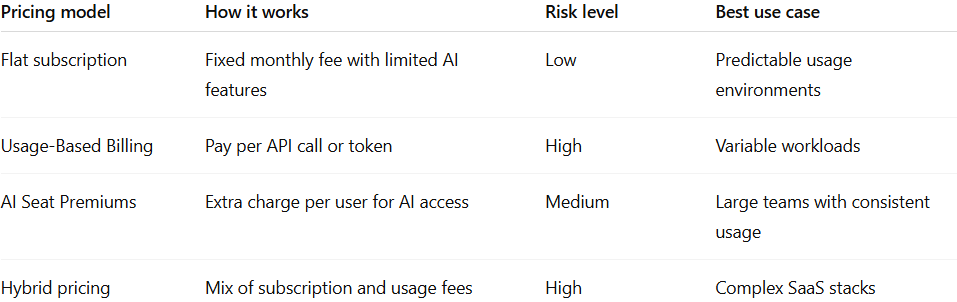
Usage-Based Billing offers flexibility but often leads to unpredictable costs. AI Seat Premiums are easier to forecast but can be wasteful if not all users need access. Hybrid models combine both risks, making auditing even more critical.
Using benchmarking data to negotiate better contracts
Once usage is visible, the next step is optimization. Subscribed.fyi provides benchmarking data that shows how similar companies spend on AI features. This allows teams to identify overpricing and negotiate better contracts.
For example, if a company is paying above average for API usage, benchmarking data can highlight this gap and support pricing discussions with vendors. This ensures that contracts reflect actual consumption rather than inflated estimates.
A real use case is a SaaS startup that reduced AI costs by renegotiating API rates after identifying overconsumption patterns. By aligning pricing with actual usage, they improved ROI without cutting functionality.
Eliminating ghost AI subscriptions and unused features
Ghost AI subscriptions are one of the biggest contributors to unnecessary spend. These include inactive accounts, unused integrations, and features enabled by default.
Subscribed.fyi helps identify these gaps by linking usage data to actual user activity. Teams can quickly disable unused features, downgrade plans, or remove redundant tools.
For example, a customer support team might subscribe to multiple AI chat tools but only actively use one. By auditing usage, they can eliminate duplicates and consolidate spending into a single platform.
Building a sustainable AI cost strategy
Managing AI costs is not a one-time task. It requires ongoing monitoring, regular audits, and clear usage policies. Teams should define who needs AI access, set usage limits, and track performance against outcomes.
The goal is not to eliminate AI spending but to ensure it delivers measurable value. By combining SaaS Spend Management with API Credit Tracking, companies can maintain control while still benefiting from AI innovation.
As shown in similar SaaS evaluation frameworks, structured comparisons and centralized insights are essential for making informed decisions.
Conclusion
The AI tax is real, but it is manageable with the right approach. Instead of reacting to rising costs, teams should proactively audit their stack, track usage, and optimize contracts.
Subscribed.fyi plays a key role by offering benchmarking insights and API Credit Tracking in one platform. This makes it easier to identify waste, eliminate Ghost AI subscriptions, and align Usage-Based Billing with actual ROI.
If your SaaS stack includes multiple AI tools, now is the time to review it. Start by consolidating insights, comparing pricing models, and using data-driven strategies to ensure every dollar spent on AI contributes to real business outcomes.
Relevant links