Sign in to review
Join our community of software reviewers on Subscribed.fyi

Continue With Google
Continue With LinkedIn
Continue Review with Email
Continue with Email
Enter your email to continue.
Continue
Enter your password
Enter your password to finish setting up your account.
Continue
Activate your email
Enter activation code we sent to your email.
Submit
Reset your password
Enter activation code we sent to your email.
Submit
Set your new password
Enter a new password for your account.
Submit
Categories
For Business
Log in
Provide My Insights
Add Product
Suggested products People also compare with
Add to Comparison
Suggested products People also compare with

Compare Angular and Django

We are comparing Angular and Django to evaluate which one is the best product.

Suggested products People also compare with
Review Pricing Alternatives Experience

Review

80%
28/36 Metric achieved
83%
29/36 Metric achieved

Subscribed Metric

Customer Support 4/6
Security 4/6
Ease of Use 5/6
Value of Money 5/6
Integration 4/6
Popularity 6/6

Subscribed Metric

Customer Support 3/6
Security 6/6
Ease of Use 5/6
Value of Money 5/6
Integration 4/6
Popularity 6/6

Pros & Cons

Supports dynamic single-page applications.
Strong community support and resources.
Modular design aids code manageability.
Wide range of integrated features.
Steep learning curve for beginners.
Frequent updates may cause compatibility issues.
Performance can lag on older devices.
Heavy framework increases initial load time.

Pros & Cons

Built-in admin interface simplifies management
Strong security features included by default
Versatile for various project scales
Extensive libraries and supportive community
Steep learning curve for beginners
Not optimal for small or basic projects
Complex debugging and customization hurdles
Limited NoSQL database support

Conclusion

Angular is a robust open-source web development framework designed for professional developers to build dynamic web and mobile applications. Key features include two-way data binding, single-page application support, modular architecture, responsive design, dependency injection, and reusable components. It enables performance-oriented development with TypeScript, lazy loading, and integrated testing tools. While it has a steeper learning curve compared to React or Vue.js, its scalability and enterprise-grade capabilities make it ideal for large teams and complex applications. Angular stands out in community support and comprehensive features but may be overwhelming for small-scale projects due to its initial setup. Free to use, Angular is a cost-effective solution backed by reliable long-term support and documentation, ensuring regular updates and security. For developers, it offers flexibility and robust tools, though it is less suited for non-technical users like designers or marketers. In summary, Angular is a powerful, feature-rich choice for scalable, enterprise-grade app development.

Conclusion

Django is a high-level open-source Python web framework ideal for developers building secure, scalable apps. Features include built-in admin interface, ORM, authentication, and a modular architecture. It excels in rapid development but has a steep learning curve for beginners. Suitable for mid-large projects, it outclasses lighter alternatives like Flask in functionality but is heavier and not suited for simple apps. Its strong community support and free-to-use model boost cost efficiency for businesses.

Pricing

Angular Pricing

Pricing Range Not specified

Django Pricing

Pricing Range Not specified

Alternatives

Angular Alternatives

Django logo

Django

83%
React logo

React

74%
See All Angular Alternatives

Django Alternatives

Firebase logo

Firebase

85%
ZipRecruiter logo

ZipRecruiter

75%
See All Django Alternatives

Experience

Angular Screenshots

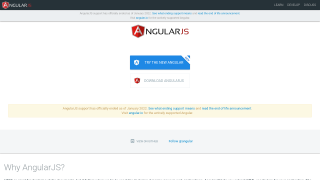
Angular screenshot 1

Django Screenshots

Django screenshot 1