Project management tools like , Notion, Basecamp, Lark, Slack, Asana and Trello.
AI chatbot tools like ChatGPT, Grok, Perplexity, Claude, Gemini and Copilot.
Marketing analytics platforms like Google Analytics, Similarweb and Semrush.
CRM systems like HubSpot, Apollo.io Pipedrive, Zoho CRM, and Salesforce.
VPNs, SSO providers, and password managers like NordVPN, Okta, and LastPass.
Email marketing and campaign tools like MailerLite, Instantly, and Mailchimp.
Website builders, hosting tools like Hostinger, Webflow, Framer, and Shopify
HR and recruiting software like ATS platforms, BambooHR, Workday, and Lever.
Automate finances with confidence like Quickbooks, Stripe, Brex, and Mercury.
Design and editing tools like Figma, Canva, Adobe Creative Cloud, CapCut.
Workflow automation tools like Zapier, Make, Clay, and Reclaim.ai.
No-code and AI-native dev tools like Cursor, Windsurf, Lovable and Bubble.

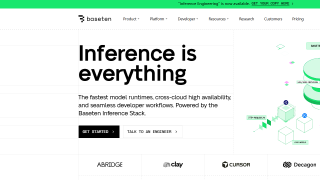
Baseten excels in one core area: production-grade inference. Its infrastructure is optimized for serving models at scale with strong performance and cost efficiency, making it a strong choice for teams building real-time AI applications. Features like autoscaling, GPU optimization, and pre-built model APIs significantly reduce the complexity of deploying AI systems.
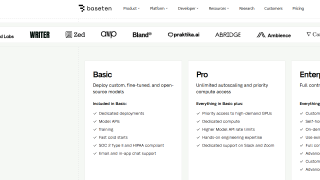
However, its specialization is also its limitation. Baseten does not provide a full MLOps stack, meaning teams may need additional tools for training, orchestration, or backend services. Its usage-based pricing model, while flexible, can also introduce unpredictability for workloads with fluctuating demand. Overall, Baseten is best suited for teams focused on inference-heavy applications rather than full AI lifecycle management.
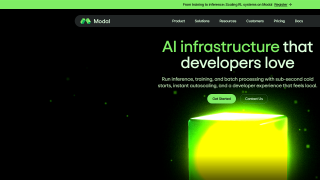
Modal’s biggest advantage is its developer experience. By abstracting infrastructure into simple Python code, it dramatically reduces the complexity of deploying AI workloads. Its fast cold starts and automatic scaling make it particularly well-suited for production AI systems that require responsiveness and elasticity.
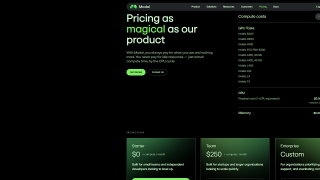
However, this simplicity comes with trade-offs. The platform is highly technical and best suited for developers comfortable with AI infrastructure concepts. Additionally, its usage-based pricing model can make cost estimation difficult, especially for large-scale workloads or inefficient code.
Overall, Modal is ideal for teams that want maximum performance and scalability without the overhead of managing cloud infrastructure, especially for AI-heavy applications.