Project management tools like , Notion, Basecamp, Lark, Slack, Asana and Trello.
AI chatbot tools like ChatGPT, Grok, Perplexity, Claude, Gemini and Copilot.
Marketing analytics platforms like Google Analytics, Similarweb and Semrush.
CRM systems like HubSpot, Apollo.io Pipedrive, Zoho CRM, and Salesforce.
VPNs, SSO providers, and password managers like NordVPN, Okta, and LastPass.
Email marketing and campaign tools like MailerLite, Instantly, and Mailchimp.
Website builders, hosting tools like Hostinger, Webflow, Framer, and Shopify
HR and recruiting software like ATS platforms, BambooHR, Workday, and Lever.
Automate finances with confidence like Quickbooks, Stripe, Brex, and Mercury.
Design and editing tools like Figma, Canva, Adobe Creative Cloud, CapCut.
Workflow automation tools like Zapier, Make, Clay, and Reclaim.ai.
No-code and AI-native dev tools like Cursor, Windsurf, Lovable and Bubble.

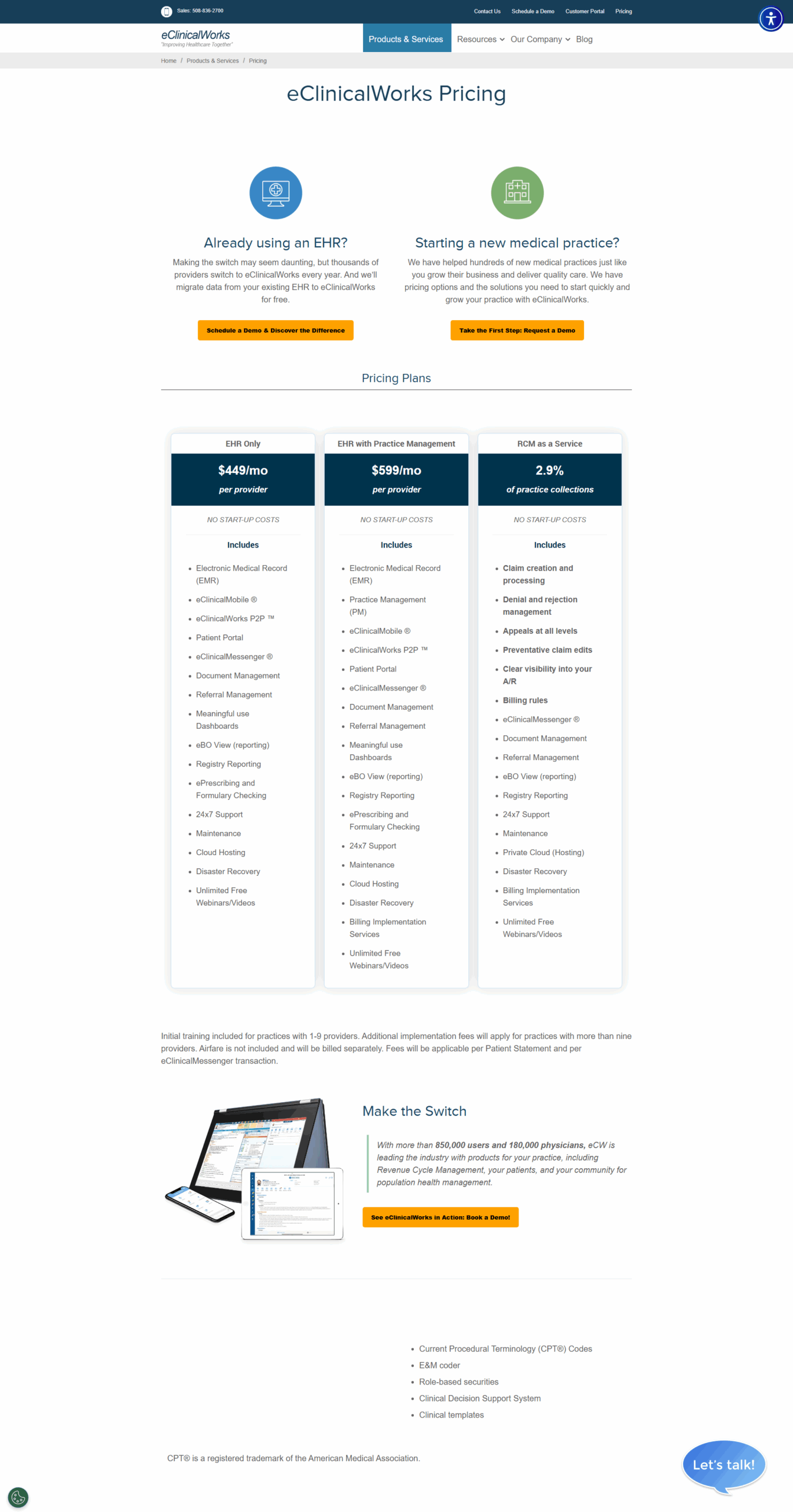
eClinicalWorks is a cloud-based EMR solution for healthcare providers like hospitals and clinics, offering features like AI assistants (PRISMA, Scribe, Eva), billing automation, telehealth, and patient engagement tools. Its strengths include seamless workflow integration, customizable templates, and value-based care features, but its usability and customer support have drawn mixed reviews. Pricing starts at $449/month per provider. Compared to competitors like Epic or Cerner, eClinicalWorks is cost-effective but less intuitive for large practices. While customer service and technical support can be challenging, its affordability and comprehensive toolset make it appealing for small to mid-size practices.
Epic is a comprehensive EHR software designed for healthcare providers to manage patient information, clinical workflows, and operational tasks. Key features include interoperability, customized dashboards, meaningful use reporting, and seamless integration with other health systems. It supports efficient patient management but has a steep learning curve. While more expensive than most competitors, its robust functionality justifies the cost for large hospitals. Alternatives like Cerner and WebPT offer simpler interfaces but lack Epic’s depth. Customer support is rated highly, making it ideal for medium-to-large healthcare organizations.