Project management tools like , Notion, Basecamp, Lark, Slack, Asana and Trello.
AI chatbot tools like ChatGPT, Grok, Perplexity, Claude, Gemini and Copilot.
Marketing analytics platforms like Google Analytics, Similarweb and Semrush.
CRM systems like HubSpot, Apollo.io Pipedrive, Zoho CRM, and Salesforce.
VPNs, SSO providers, and password managers like NordVPN, Okta, and LastPass.
Email marketing and campaign tools like MailerLite, Instantly, and Mailchimp.
Website builders, hosting tools like Hostinger, Webflow, Framer, and Shopify
HR and recruiting software like ATS platforms, BambooHR, Workday, and Lever.
Automate finances with confidence like Quickbooks, Stripe, Brex, and Mercury.
Design and editing tools like Figma, Canva, Adobe Creative Cloud, CapCut.
Workflow automation tools like Zapier, Make, Clay, and Reclaim.ai.
No-code and AI-native dev tools like Cursor, Windsurf, Lovable and Bubble.

EViews is a robust statistical analysis tool ideal for researchers, economists, and analysts focusing on econometrics, time series analysis, and forecasting. Its ease of use, regression capabilities, visualization tools, and integration with R and MATLAB make it user-friendly, especially for non-coders. While priced higher than alternatives like SPSS and Stata, it simplifies workflows without extensive programming. However, its visualizations and performance on large datasets can lag. Support is effective, though costly for smaller businesses. For budget-sensitive users or advanced functionality (e.g., better visualizations), free tools like R may be viable. EViews’ focus on econometrics and simplicity makes it a top choice for academia and economic research.
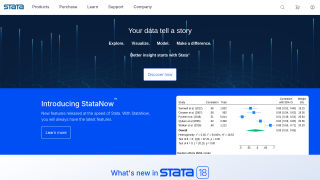
Stata is a comprehensive statistical analysis software tailored for researchers in economics, sociology, health, and education. It excels in data manipulation, visualization, regressions, and advanced econometrics. Renowned for its reliability, it supports up to 64-core processing for faster data handling. Compared to alternatives like R, SPSS, or MATLAB, Stata is more user-friendly for non-programmers but lacks the flexibility and cost advantages of R. Priced higher than competitors, its cost may deter small teams, though educators receive discounts. Customer support and a strong user community enhance usability. Best for academicians and policymakers requiring precise data insights.