Project management tools like , Notion, Basecamp, Lark, Slack, Asana and Trello.
AI chatbot tools like ChatGPT, Grok, Perplexity, Claude, Gemini and Copilot.
Marketing analytics platforms like Google Analytics, Similarweb and Semrush.
CRM systems like HubSpot, Apollo.io Pipedrive, Zoho CRM, and Salesforce.
VPNs, SSO providers, and password managers like NordVPN, Okta, and LastPass.
Email marketing and campaign tools like MailerLite, Instantly, and Mailchimp.
Website builders, hosting tools like Hostinger, Webflow, Framer, and Shopify
HR and recruiting software like ATS platforms, BambooHR, Workday, and Lever.
Automate finances with confidence like Quickbooks, Stripe, Brex, and Mercury.
Design and editing tools like Figma, Canva, Adobe Creative Cloud, CapCut.
Workflow automation tools like Zapier, Make, Clay, and Reclaim.ai.
No-code and AI-native dev tools like Cursor, Windsurf, Lovable and Bubble.

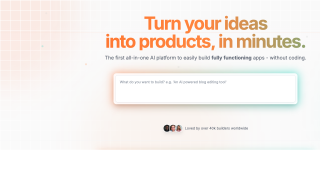
Fine AI represents a new generation of development platforms that leverage AI to automate the entire app creation process. The platform excels at rapid prototyping and deployment, allowing users to transform ideas into functional applications through natural language descriptions. Its comprehensive feature set—including authentication, databases, and backend functions—makes it particularly valuable for individual developers and small teams with limited resources. While powerful, the platform’s AI-driven approach may introduce limitations for highly customized or complex applications that require granular control.
When compared to Builder.ai, Fine AI offers a more streamlined, AI-automated approach but potentially less flexibility for complex projects. Unlike Microsoft Power Apps, which focuses primarily on business applications within the Microsoft ecosystem, Fine AI supports a broader range of app types with stronger emphasis on AI-driven development. Tools like Appy Pie provide templates for quick app creation but lack Fine AI’s level of tailored development based on natural language descriptions.
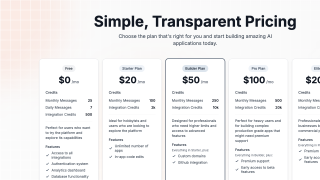
Fine AI delivers exceptional value with its free tier and reasonably priced paid plans ($19-100/month), making advanced development capabilities accessible to individual creators and small teams. The platform’s tiered support structure—improving from self-service resources to VIP support at higher levels—may present challenges for users on lower-tier plans requiring assistance. Documentation quality appears comprehensive, though as a relatively new platform, community resources remain in development compared to more established alternatives.