Project management tools like , Notion, Basecamp, Lark, Slack, Asana and Trello.
AI chatbot tools like ChatGPT, Grok, Perplexity, Claude, Gemini and Copilot.
Marketing analytics platforms like Google Analytics, Similarweb and Semrush.
CRM systems like HubSpot, Apollo.io Pipedrive, Zoho CRM, and Salesforce.
VPNs, SSO providers, and password managers like NordVPN, Okta, and LastPass.
Email marketing and campaign tools like MailerLite, Instantly, and Mailchimp.
Website builders, hosting tools like Hostinger, Webflow, Framer, and Shopify
HR and recruiting software like ATS platforms, BambooHR, Workday, and Lever.
Automate finances with confidence like Quickbooks, Stripe, Brex, and Mercury.
Design and editing tools like Figma, Canva, Adobe Creative Cloud, CapCut.
Workflow automation tools like Zapier, Make, Clay, and Reclaim.ai.
No-code and AI-native dev tools like Cursor, Windsurf, Lovable and Bubble.

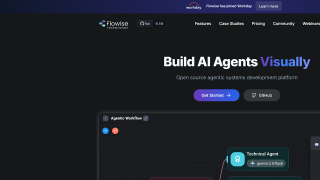
Flowise stands out for its balance between flexibility and usability. Its visual builder lowers the barrier to creating AI workflows, while its open-source nature allows deep customization and control. Integration with LangChain further strengthens its capabilities, making it suitable for a wide range of AI applications.
However, it is not truly no-code. Users still need a solid understanding of AI concepts like embeddings, APIs, and model behavior. Additionally, while the platform simplifies orchestration, it depends heavily on external services such as LLM providers and vector databases, which can introduce additional costs and complexity. Flowise is best suited for developers and technical teams building AI-driven applications rather than beginners.
Bubble is a no-code development platform enabling users to build web applications like SaaS platforms or marketplaces without coding expertise. Its drag-and-drop editor and cloud hosting make it ideal for developers, startups, and designers. Key features include API integration, responsive design tools, and workflow automation. Pricing ranges from a free plan to $349+/month for advanced features.
Comparatively:
Alternatives like Webflow have better design capabilities, whereas Appy Pie is simpler but less flexible.
Customer support is responsive but email-based. While pricey for scaling, Bubble offers significant value for non-technical and startup users.