Project management tools like , Notion, Basecamp, Lark, Slack, Asana and Trello.
AI chatbot tools like ChatGPT, Grok, Perplexity, Claude, Gemini and Copilot.
Marketing analytics platforms like Google Analytics, Similarweb and Semrush.
CRM systems like HubSpot, Apollo.io Pipedrive, Zoho CRM, and Salesforce.
VPNs, SSO providers, and password managers like NordVPN, Okta, and LastPass.
Email marketing and campaign tools like MailerLite, Instantly, and Mailchimp.
Website builders, hosting tools like Hostinger, Webflow, Framer, and Shopify
HR and recruiting software like ATS platforms, BambooHR, Workday, and Lever.
Automate finances with confidence like Quickbooks, Stripe, Brex, and Mercury.
Design and editing tools like Figma, Canva, Adobe Creative Cloud, CapCut.
Workflow automation tools like Zapier, Make, Clay, and Reclaim.ai.
No-code and AI-native dev tools like Cursor, Windsurf, Lovable and Bubble.

Kagi’s biggest differentiator is its business model. By charging users instead of advertisers, it aligns incentives toward delivering better search results rather than maximizing clicks. This results in a noticeably cleaner and more relevant search experience, especially for research-heavy tasks.
Its customization features, like lenses and domain control, give users a level of control that traditional search engines lack. Combined with AI integration, it becomes a powerful tool for both discovery and synthesis of information.
However, the paid model is a barrier for many users, especially when free alternatives dominate the market. Additionally, its ecosystem is still smaller than Google’s, meaning it may not fully replace traditional search for all use cases. It is best suited for users who value quality, privacy, and control over convenience and cost.
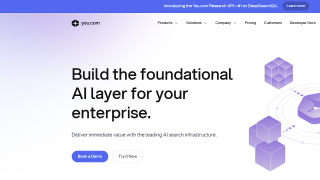
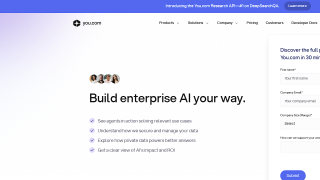
You.com stands out by combining search and productivity into a single platform. Its ability to deliver direct answers with citations significantly reduces research time and aligns with the broader shift toward “answer engines” instead of traditional search.
Its developer-focused infrastructure is another major advantage, enabling businesses to build AI-powered applications on top of its search capabilities. This positions You.com not just as a tool, but as a foundational layer for AI-driven products.
However, like all AI search engines, it faces challenges with accuracy and reliability, especially when dealing with ambiguous or low-quality sources. While its citation system helps mitigate this, users still need to verify critical information. It is best suited for users who want faster insights and integrated AI tools rather than traditional browsing.