Project management tools like , Notion, Basecamp, Lark, Slack, Asana and Trello.
AI chatbot tools like ChatGPT, Grok, Perplexity, Claude, Gemini and Copilot.
Marketing analytics platforms like Google Analytics, Similarweb and Semrush.
CRM systems like HubSpot, Apollo.io Pipedrive, Zoho CRM, and Salesforce.
VPNs, SSO providers, and password managers like NordVPN, Okta, and LastPass.
Email marketing and campaign tools like MailerLite, Instantly, and Mailchimp.
Website builders, hosting tools like Hostinger, Webflow, Framer, and Shopify
HR and recruiting software like ATS platforms, BambooHR, Workday, and Lever.
Automate finances with confidence like Quickbooks, Stripe, Brex, and Mercury.
Design and editing tools like Figma, Canva, Adobe Creative Cloud, CapCut.
Workflow automation tools like Zapier, Make, Clay, and Reclaim.ai.
No-code and AI-native dev tools like Cursor, Windsurf, Lovable and Bubble.

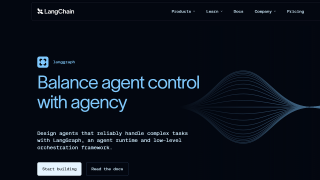
LangGraph excels in enabling complex, stateful AI workflows that go beyond simple prompt chains. Its graph-based design allows for loops, retries, and conditional execution, making it ideal for sophisticated use cases like autonomous agents, customer support systems, and multi-step reasoning pipelines.
However, this power comes with increased complexity. It requires strong engineering skills, careful architecture, and ongoing maintenance. Compared to simpler tools, development time and operational overhead are higher. LangGraph is best suited for teams that need full control and are building production-grade AI systems rather than quick prototypes.
LangChain’s biggest strength is its flexibility. It allows developers to build highly customized AI applications that go beyond simple prompts, supporting complex workflows, agents, and integrations. Its ecosystem, particularly LangSmith, adds strong capabilities for debugging and improving AI systems in production.
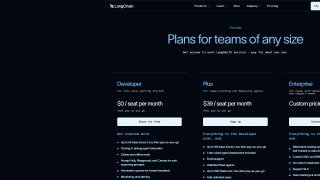
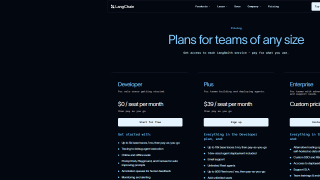
However, this flexibility comes at the cost of complexity. Developers need a solid understanding of LLM behavior, prompt engineering, and system design to use LangChain effectively. Additionally, costs are not tied to LangChain itself but to the underlying model providers and infrastructure, which can scale unpredictably.
Overall, LangChain is best suited for advanced use cases where control, extensibility, and orchestration matter more than simplicity.