Project management tools like , Notion, Basecamp, Lark, Slack, Asana and Trello.
AI chatbot tools like ChatGPT, Grok, Perplexity, Claude, Gemini and Copilot.
Marketing analytics platforms like Google Analytics, Similarweb and Semrush.
CRM systems like HubSpot, Apollo.io Pipedrive, Zoho CRM, and Salesforce.
VPNs, SSO providers, and password managers like NordVPN, Okta, and LastPass.
Email marketing and campaign tools like MailerLite, Instantly, and Mailchimp.
Website builders, hosting tools like Hostinger, Webflow, Framer, and Shopify
HR and recruiting software like ATS platforms, BambooHR, Workday, and Lever.
Automate finances with confidence like Quickbooks, Stripe, Brex, and Mercury.
Design and editing tools like Figma, Canva, Adobe Creative Cloud, CapCut.
Workflow automation tools like Zapier, Make, Clay, and Reclaim.ai.
No-code and AI-native dev tools like Cursor, Windsurf, Lovable and Bubble.

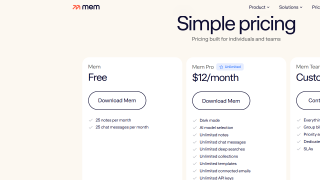
Mem’s primary strength lies in its AI-first approach to knowledge management. By removing the need for manual organization, it significantly reduces cognitive overhead and allows users to focus on capturing and using information. Features like deep search and contextual resurfacing make it particularly effective for handling large, unstructured datasets.
However, this automation comes at the cost of control. Users who prefer structured workflows or detailed customization may find the system limiting. Additionally, its relatively smaller ecosystem and reliance on AI may not appeal to those who need predictable, rule-based organization.
Mem is best suited for users who prioritize speed, simplicity, and AI assistance over manual structure and advanced customization.
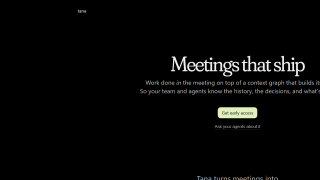
Tana’s biggest strength is its ability to unify multiple productivity functions into a single system. Its knowledge graph approach and Supertags enable a level of flexibility and structure that most traditional tools cannot match. The addition of AI further enhances productivity by automating repetitive tasks and surfacing insights from stored data.
However, this flexibility introduces complexity. New users often face a steep learning curve, especially when understanding how to structure data effectively. Additionally, while Tana is powerful, its ecosystem and integrations are still developing compared to established competitors.
Tana is best suited for users who are willing to invest time in learning a system that can scale with their needs. It excels in complex workflows but may feel excessive for simple note-taking.