Sign in to review
Join our community of software reviewers on Subscribed.fyi

Continue With Google
Continue With LinkedIn
Continue Review with Email
Continue with Email
Enter your email to continue.
Continue
Enter your password
Enter your password to finish setting up your account.
Continue
Activate your email
Enter activation code we sent to your email.
Submit
Reset your password
Enter activation code we sent to your email.
Submit
Set your new password
Enter a new password for your account.
Submit
Categories
For Business
Log in
Provide My Insights
Add Product
Suggested products People also compare with
Add to Comparison
Suggested products People also compare with

Compare Modal and AWS Elastic Beanstalk

We are comparing Modal and AWS Elastic Beanstalk to evaluate which one is the best product.

Suggested products People also compare with
Review Pricing Alternatives Experience

Review

67%
24/36 Metric achieved
80%
28/36 Metric achieved

Subscribed Metric

Customer Support 3/6
Security 5/6
Ease of Use 4/6
Value of Money 4/6
Integration 4/6
Popularity 4/6

Subscribed Metric

Customer Support 4/6
Security 5/6
Ease of Use 5/6
Value of Money 4/6
Integration 4/6
Popularity 6/6

Pros & Cons

Serverless GPU and CPU infrastructure eliminates the need to manage cloud resources manually
Supports high-performance AI workloads with sub-second cold starts and fast scaling
Simple Python-based workflow allows developers to deploy functions without complex DevOps setup
Usage-based pricing ensures you only pay for actual compute time consumed
Handles large-scale parallel workloads such as batch jobs and distributed training efficiently
Primarily Python-focused, limiting flexibility for non-Python ecosystems
Pricing can become unpredictable due to per-second compute billing
Requires technical expertise in AI and infrastructure concepts
Lacks full-stack application features compared to broader cloud platforms

Pros & Cons

Easy application deployment and scaling.
Supports multiple programming languages.
Ensures application reliability with health monitoring.
Automatic load balancing and scaling.
Costs increase with resource consumption.
Complex log management for some users.
Occasional instability during deployments.
Limited programming languages support.

Other Platform Review

Data Unavailable This information for the product is not yet available. Please check back later or explore directly on product website.

Conclusion

Modal’s biggest advantage is its developer experience. By abstracting infrastructure into simple Python code, it dramatically reduces the complexity of deploying AI workloads. Its fast cold starts and automatic scaling make it particularly well-suited for production AI systems that require responsiveness and elasticity.

However, this simplicity comes with trade-offs. The platform is highly technical and best suited for developers comfortable with AI infrastructure concepts. Additionally, its usage-based pricing model can make cost estimation difficult, especially for large-scale workloads or inefficient code.

Overall, Modal is ideal for teams that want maximum performance and scalability without the overhead of managing cloud infrastructure, especially for AI-heavy applications.

Conclusion

AWS Elastic Beanstalk is a PaaS solution designed for developers to quickly deploy and scale web apps using languages like Java, .NET, PHP, Node.js, Python, Ruby, Go, and Docker. It handles infrastructure tasks such as load balancing, scaling, and monitoring while offering flexibility to customize configurations.

Key features: Auto-scaling, health monitoring, support for multiple programming languages, seamless integration with AWS services like EC2 and S3.

Performance: Ideal for SMEs, startups, and development-focused professionals, saving time on infrastructure management.

Pricing: Slightly more expensive than average Cloud PaaS options.

Pros: Simplifies deployment, supports multiple frameworks, and offers scalable architecture.
Cons: Limited manual configurations, high costs, and occasional issues with legacy apps.

Alternatives: Google App Engine and Azure App Service provide more competitive pricing and better usability for designers or marketers. AWS Elastic Beanstalk, however, excels in flexibility for developers demanding deep integration with AWS infrastructure.

Customer support: Reliable but better suited for those familiar with AWS services.

Cost-effectiveness: May be costly at scale but efficient for SMBs seeking rapid deployment and scaling without infrastructure overhead.

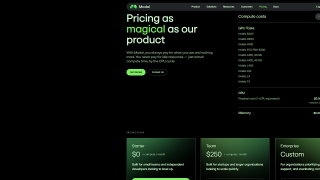
Pricing

Modal Pricing

Pricing Range Usage-Based See Modal Pricing

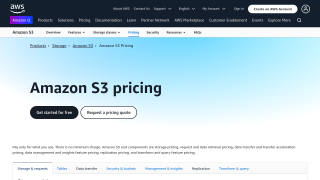
AWS Elastic Beanstalk Pricing

Pricing Range Amazon S3 Pricing: $0.0004-$0.023/Month Amazon Elastic Beanstalk Pricing: Not specified See AWS Elastic Beanstalk Pricing

Alternatives

Modal Alternatives

Netlify logo

Netlify

85%
AWS Elastic Beanstalk logo

AWS Elastic Beanstalk

80%
Render logo

Render

78%
See All Modal Alternatives

AWS Elastic Beanstalk Alternatives

Google App Engine logo

Google App Engine

88%
GitHub logo

GitHub

85%
DigitalOcean logo

DigitalOcean

85%
See All AWS Elastic Beanstalk Alternatives

Experience

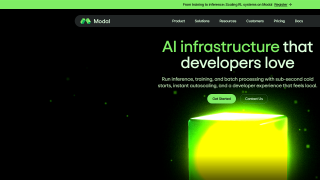
Modal Screenshots

Modal screenshot 1
Modal screenshot 2

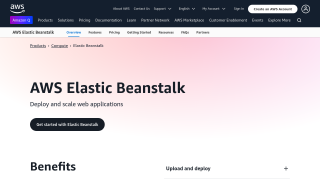
AWS Elastic Beanstalk Screenshots

AWS Elastic Beanstalk screenshot 1
AWS Elastic Beanstalk screenshot 2