Project management tools like , Notion, Basecamp, Lark, Slack, Asana and Trello.
AI chatbot tools like ChatGPT, Grok, Perplexity, Claude, Gemini and Copilot.
Marketing analytics platforms like Google Analytics, Similarweb and Semrush.
CRM systems like HubSpot, Apollo.io Pipedrive, Zoho CRM, and Salesforce.
VPNs, SSO providers, and password managers like NordVPN, Okta, and LastPass.
Email marketing and campaign tools like MailerLite, Instantly, and Mailchimp.
Website builders, hosting tools like Hostinger, Webflow, Framer, and Shopify
HR and recruiting software like ATS platforms, BambooHR, Workday, and Lever.
Automate finances with confidence like Quickbooks, Stripe, Brex, and Mercury.
Design and editing tools like Figma, Canva, Adobe Creative Cloud, CapCut.
Workflow automation tools like Zapier, Make, Clay, and Reclaim.ai.
No-code and AI-native dev tools like Cursor, Windsurf, Lovable and Bubble.

Railway’s main strength is its developer experience. It removes much of the friction associated with deploying and managing infrastructure, making it easy to go from code to production quickly. The automatic scaling and usage-based pricing model are particularly useful for projects with variable workloads.
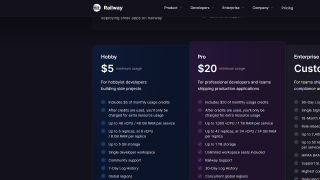
However, this same pricing model introduces unpredictability, especially as applications grow. Teams may find it harder to estimate costs compared to fixed pricing platforms. Additionally, while Railway is powerful for rapid development, it may lack the depth and enterprise-grade features of larger cloud providers.
Overall, Railway is best suited for developers prioritizing speed, simplicity, and flexibility, especially in early-stage or moderately scaled applications.
AWS Elastic Beanstalk is a PaaS solution designed for developers to quickly deploy and scale web apps using languages like Java, .NET, PHP, Node.js, Python, Ruby, Go, and Docker. It handles infrastructure tasks such as load balancing, scaling, and monitoring while offering flexibility to customize configurations.
Key features: Auto-scaling, health monitoring, support for multiple programming languages, seamless integration with AWS services like EC2 and S3.
Performance: Ideal for SMEs, startups, and development-focused professionals, saving time on infrastructure management.
Pricing: Slightly more expensive than average Cloud PaaS options.
Pros: Simplifies deployment, supports multiple frameworks, and offers scalable architecture.
Cons: Limited manual configurations, high costs, and occasional issues with legacy apps.
Alternatives: Google App Engine and Azure App Service provide more competitive pricing and better usability for designers or marketers. AWS Elastic Beanstalk, however, excels in flexibility for developers demanding deep integration with AWS infrastructure.
Customer support: Reliable but better suited for those familiar with AWS services.
Cost-effectiveness: May be costly at scale but efficient for SMBs seeking rapid deployment and scaling without infrastructure overhead.