Project management tools like , Notion, Basecamp, Lark, Slack, Asana and Trello.
AI chatbot tools like ChatGPT, Grok, Perplexity, Claude, Gemini and Copilot.
Marketing analytics platforms like Google Analytics, Similarweb and Semrush.
CRM systems like HubSpot, Apollo.io Pipedrive, Zoho CRM, and Salesforce.
VPNs, SSO providers, and password managers like NordVPN, Okta, and LastPass.
Email marketing and campaign tools like MailerLite, Instantly, and Mailchimp.
Website builders, hosting tools like Hostinger, Webflow, Framer, and Shopify
HR and recruiting software like ATS platforms, BambooHR, Workday, and Lever.
Automate finances with confidence like Quickbooks, Stripe, Brex, and Mercury.
Design and editing tools like Figma, Canva, Adobe Creative Cloud, CapCut.
Workflow automation tools like Zapier, Make, Clay, and Reclaim.ai.
No-code and AI-native dev tools like Cursor, Windsurf, Lovable and Bubble.

Ranorex Studio is a robust test automation tool for desktop, web, and mobile applications, ideal for QA professionals and developers. Its key features include codeless automation via drag-and-drop, reliable object recognition, seamless integration with tools like Jenkins and Selenium, data-driven testing, and support for diverse technologies. Compared to alternatives like TestComplete or LambdaTest, Ranorex excels in legacy app support and cost-effectiveness, though it has a steeper learning curve.
Pricing starts at $3,950 per workstation. While its UI may feel dated and API documentation lacks depth, its exceptional customer support and feature set make it a strong choice for small to medium-sized businesses aiming for end-to-end testing. Suitable for experienced developers and testers with moderate coding knowledge, Ranorex’s all-in-one capabilities are less appealing to marketers or non-technical users. Cost-effective, it offers a competitive solution by including updates and support in the license cost.
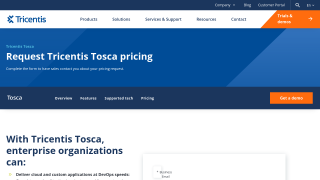
Tricentis Tosca is a codeless, AI-powered test automation tool designed for QA engineers, developers, and IT teams. It supports over 160 technologies, enabling streamlined UI, API, and data testing in a reusable model-based environment. Key features include Vision AI for test self-healing, risk optimization, and enterprise-grade flexibility. Pros: faster test cycles and higher automation rates. Cons: higher costs compared to rivals (e.g., Katalon, Ranorex). Customer support is responsive but limited by Tosca’s steep learning curve. Cost-effectiveness is industry-specific, suitable for large-scale needs.