Project management tools like , Notion, Basecamp, Lark, Slack, Asana and Trello.
AI chatbot tools like ChatGPT, Grok, Perplexity, Claude, Gemini and Copilot.
Marketing analytics platforms like Google Analytics, Similarweb and Semrush.
CRM systems like HubSpot, Apollo.io Pipedrive, Zoho CRM, and Salesforce.
VPNs, SSO providers, and password managers like NordVPN, Okta, and LastPass.
Email marketing and campaign tools like MailerLite, Instantly, and Mailchimp.
Website builders, hosting tools like Hostinger, Webflow, Framer, and Shopify
HR and recruiting software like ATS platforms, BambooHR, Workday, and Lever.
Automate finances with confidence like Quickbooks, Stripe, Brex, and Mercury.
Design and editing tools like Figma, Canva, Adobe Creative Cloud, CapCut.
Workflow automation tools like Zapier, Make, Clay, and Reclaim.ai.
No-code and AI-native dev tools like Cursor, Windsurf, Lovable and Bubble.

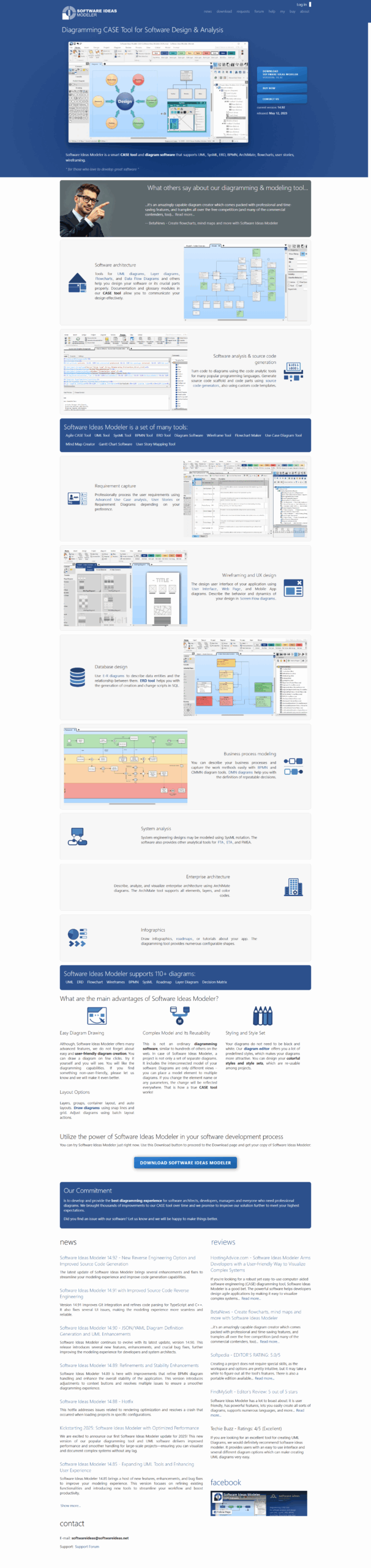
Software Ideas Modeler Overview
Software Ideas Modeler is an advanced diagramming tool designed for software developers, architects, and data analysts. It supports over 80 diagram types, including UML, ERD, BPMN, and flowcharts, with features like wireframing, source code generation, and reverse engineering. It’s praised for its robust functionality and ease of use. Pricing details are not fully disclosed but noted as affordable for individuals and teams.
Comparison to Alternatives
Compared to tools like Miro, Lucidchart, and Draw.io, Software Ideas Modeler is more developer-focused, offering code generation and reverse engineering, but has a steeper learning curve for beginners. Alternatives may better suit designers or general teams due to simpler interfaces and broader collaboration features.
Customer Support & Cost
Customer support is reliable but occasionally slow. With time-efficient tools and cost-effectiveness, it’s highly valued for software and database modeling professionals. However, it may lack community support and offline capability.
Miro is a leading visual collaboration platform tailored for designers, developers, marketers, and managers in need of real-time teamwork and brainstorming. Key features include an intuitive whiteboard, pre-designed templates, agile workflow tools, integrations with apps like Jira and Slack, and real-time collaboration. Its plans range from free to $8-$16 per user/month, with an Enterprise option available. Compared to rivals like Lucidspark and Mural, Miro excels in ease of use, scalability, and frequent updates but can face performance lags in large boards. Its customer support is responsive, and the tool offers excellent value for teams emphasizing creative collaboration.