Project management tools like , Notion, Basecamp, Lark, Slack, Asana and Trello.
AI chatbot tools like ChatGPT, Grok, Perplexity, Claude, Gemini and Copilot.
Marketing analytics platforms like Google Analytics, Similarweb and Semrush.
CRM systems like HubSpot, Apollo.io Pipedrive, Zoho CRM, and Salesforce.
VPNs, SSO providers, and password managers like NordVPN, Okta, and LastPass.
Email marketing and campaign tools like MailerLite, Instantly, and Mailchimp.
Website builders, hosting tools like Hostinger, Webflow, Framer, and Shopify
HR and recruiting software like ATS platforms, BambooHR, Workday, and Lever.
Automate finances with confidence like Quickbooks, Stripe, Brex, and Mercury.
Design and editing tools like Figma, Canva, Adobe Creative Cloud, CapCut.
Workflow automation tools like Zapier, Make, Clay, and Reclaim.ai.
No-code and AI-native dev tools like Cursor, Windsurf, Lovable and Bubble.

Supabase’s biggest strength is its combination of simplicity and flexibility. By building on PostgreSQL, it gives developers powerful data modeling capabilities while still offering the convenience of a managed backend. Its open-source nature and self-hosting option also reduce vendor lock-in, making it attractive for long-term projects.
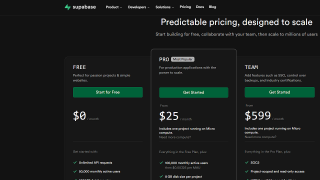
However, the platform requires more technical understanding compared to plug-and-play alternatives. Developers need familiarity with SQL and backend concepts to fully leverage its capabilities. Additionally, costs can increase with compute usage, especially when scaling edge functions or high-traffic applications.
Overall, Supabase is best suited for developers who want a modern backend with strong database control, rather than a fully abstracted no-code solution.
Render is a unified PaaS tailored for developers and development teams, offering features like free SSL, auto-scaling, managed databases, and continuous deploys from Git, all with global CDN support. Pricing starts at $0/month for static sites, making it highly cost-effective. Compared to tools like Heroku (costly) or Vercel (frontend-focused), Render provides a versatile backend/frontend solution, excelling for full-stack applications. Users praise its ease of use, strong feature set, and responsive customer support. However, its enterprise scalability might lag behind competitors like DigitalOcean. Overall, Render is ideal for small-to-mid-scale projects due to its robust performance and affordability.