Project management tools like , Notion, Basecamp, Lark, Slack, Asana and Trello.
AI chatbot tools like ChatGPT, Grok, Perplexity, Claude, Gemini and Copilot.
Marketing analytics platforms like Google Analytics, Similarweb and Semrush.
CRM systems like HubSpot, Apollo.io Pipedrive, Zoho CRM, and Salesforce.
VPNs, SSO providers, and password managers like NordVPN, Okta, and LastPass.
Email marketing and campaign tools like MailerLite, Instantly, and Mailchimp.
Website builders, hosting tools like Hostinger, Webflow, Framer, and Shopify
HR and recruiting software like ATS platforms, BambooHR, Workday, and Lever.
Automate finances with confidence like Quickbooks, Stripe, Brex, and Mercury.
Design and editing tools like Figma, Canva, Adobe Creative Cloud, CapCut.
Workflow automation tools like Zapier, Make, Clay, and Reclaim.ai.
No-code and AI-native dev tools like Cursor, Windsurf, Lovable and Bubble.

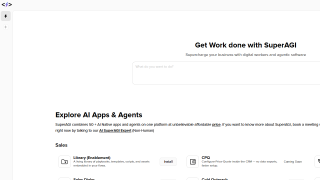
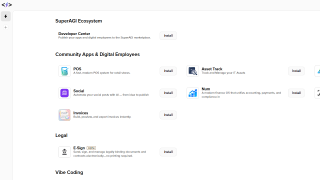
SuperAGI’s biggest strength is its ambition to unify agent-based AI with real business workflows. It bridges two worlds: developer-centric agent frameworks and enterprise SaaS platforms. This makes it particularly powerful for organizations looking to automate complex processes using AI agents rather than simple rule-based automation.
However, the platform’s dual identity also creates challenges. The open-source framework and commercial product have diverged, which can cause confusion for users deciding how to adopt it. Additionally, compared to established CRM or AI platforms, its ecosystem and tooling are still evolving. SuperAGI is best suited for forward-thinking teams willing to invest in agent-based automation rather than those seeking plug-and-play solutions.
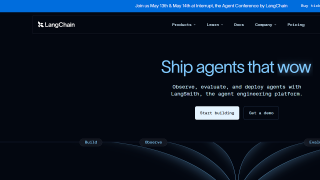
LangChain’s biggest strength is its flexibility. It allows developers to build highly customized AI applications that go beyond simple prompts, supporting complex workflows, agents, and integrations. Its ecosystem, particularly LangSmith, adds strong capabilities for debugging and improving AI systems in production.
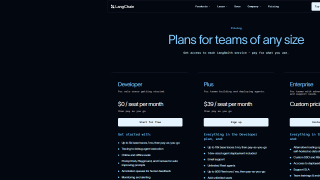
However, this flexibility comes at the cost of complexity. Developers need a solid understanding of LLM behavior, prompt engineering, and system design to use LangChain effectively. Additionally, costs are not tied to LangChain itself but to the underlying model providers and infrastructure, which can scale unpredictably.
Overall, LangChain is best suited for advanced use cases where control, extensibility, and orchestration matter more than simplicity.