Project management tools like , Notion, Basecamp, Lark, Slack, Asana and Trello.
AI chatbot tools like ChatGPT, Grok, Perplexity, Claude, Gemini and Copilot.
Marketing analytics platforms like Google Analytics, Similarweb and Semrush.
CRM systems like HubSpot, Apollo.io Pipedrive, Zoho CRM, and Salesforce.
VPNs, SSO providers, and password managers like NordVPN, Okta, and LastPass.
Email marketing and campaign tools like MailerLite, Instantly, and Mailchimp.
Website builders, hosting tools like Hostinger, Webflow, Framer, and Shopify
HR and recruiting software like ATS platforms, BambooHR, Workday, and Lever.
Automate finances with confidence like Quickbooks, Stripe, Brex, and Mercury.
Design and editing tools like Figma, Canva, Adobe Creative Cloud, CapCut.
Workflow automation tools like Zapier, Make, Clay, and Reclaim.ai.
No-code and AI-native dev tools like Cursor, Windsurf, Lovable and Bubble.

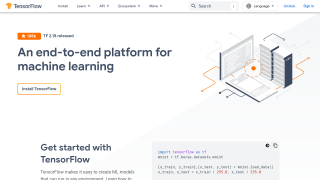
TensorFlow is an open-source platform ideal for researchers, developers, and businesses tackling machine learning (ML) and deep learning (DL) tasks. It features a rich library for model development, including pre-built algorithms, scalable infrastructure, and neural network support. Highlights include TensorBoard for visualization and compatibility with Python, Java, and other languages. However, it has a steep learning curve and requires high computational resources.
Pros vs Alternatives
Compared to Vertex AI or MATLAB, TensorFlow offers unmatched flexibility for custom ML workflows but lags behind drag-and-drop simplicity. Its open-source nature makes it more cost-efficient for long-term scalability than competing solutions.
Customer Support & Pricing
Support is community-driven but robust, with frequent updates. It’s cost-effective, especially for small businesses, being 47% cheaper than other ML platforms. Ideal for tech-savvy users, TensorFlow excels in power and adaptability over ease of use.
MATLAB is a high-performance programming and simulation platform tailored for engineers, students, and data scientists. Its key features include advanced numerical computation, 3D modeling, data visualization, machine learning, and pre-built algorithms. MATLAB excels in data analysis and simulations but has a steep learning curve and high cost (up to 36% above average for businesses). Better suited for engineering than general analytics tools like Python or TensorFlow. Customer support is robust, but cost-efficiency may vary for small-scale users.