

The Era of Full-Stack AI Coding Agents
- AI Image Generators Software AI Writing Assistant Popular Tools AI Tools WebOps Platforms Bug Tracking & Feedback Software Web Development & Design
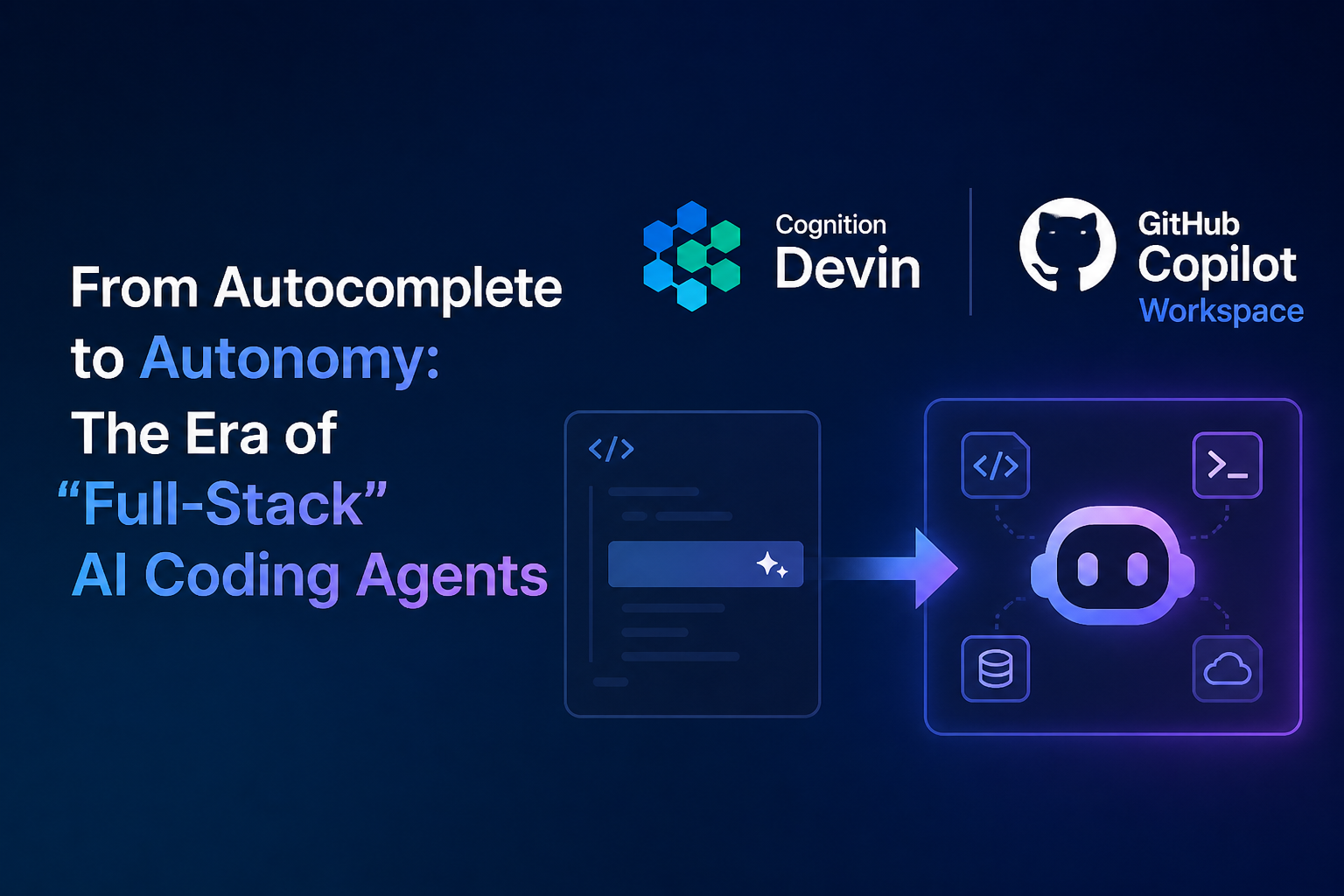
In 2026, AI tools have moved far beyond simple autocomplete. Developers are no longer limited to getting inline suggestions. Instead, modern coding agents can understand entire repositories, generate pull requests, run tests, and debug issues with minimal supervision. This shift is redefining the developer workflow, turning engineers from active code writers into strategic reviewers.
Platforms listed on Subscribed.fyi such as Cognition Devin and GitHub Copilot Workspace highlight this transformation. These tools are not just assistants. They are autonomous systems capable of handling complex engineering tasks end-to-end.
If you previously relied on deployment comparisons like those in Best deployment platforms for developers, the same decision-making mindset now applies to AI coding agents. Choosing the right tool can directly impact development speed, code quality, and operational efficiency.
What are Full Stack AI coding agents
Full-stack AI coding agents are systems that operate across the entire software lifecycle. Unlike traditional tools that focus on writing code snippets, these agents can:
- Understand full repositories and architecture
- Execute multi-step tasks such as feature implementation
- Run and fix failing tests
- Generate and manage pull requests
- Refactor code with minimal input
This capability is often referred to as agentic execution. Instead of reacting to prompts, the system plans, executes, and iterates independently.
How these tools change the developer role
The biggest shift is not technical. It is behavioral.
Developers are moving from writing code line by line to supervising AI-generated output. This creates a new workflow:
- Define the task clearly
- Let the agent execute
- Review and validate outputs
- Approve or request revisions
For example, with Cognition Devin, a developer can assign a bug fix, and the agent will locate the issue, implement a fix, run tests, and propose a pull request. The human role becomes focused on validation rather than execution.
This mirrors how deployment platforms automated infrastructure tasks. Just as developers no longer manually configure servers, they are now starting to delegate coding itself.
Key tools leading the shift
Several platforms available through Subscribed.fyi stand out in this space.
Cognition Devin focuses on autonomous task execution. It acts like a junior developer that can independently complete tickets.
GitHub Copilot Workspace builds on existing Copilot features by enabling full project awareness and multi-step execution directly within development environments.
Both tools emphasize reducing manual effort while maintaining developer oversight.
Comparison of leading AI coding agents

Real use cases in modern development
Startups are using these tools to accelerate MVP development. Instead of hiring large teams, a small group can manage AI agents to build features quickly.
Enterprise teams use autonomous agents to handle repetitive bug fixes and internal tooling updates. This frees senior engineers to focus on architecture and strategy.
Freelancers and solo developers benefit from GitHub Copilot Workspace by speeding up everyday coding tasks while maintaining control over final outputs.
These real-world applications show that the value is already impacting productivity and cost.
Choosing the right platform
Selecting the right AI coding agent depends on your workflow.
If you want full autonomy, Cognition Devin is a strong choice.
If you prefer seamless integration into your existing workflow, GitHub Copilot Workspace fits naturally into development environments.
Using Subscribed.fyi helps streamline this decision. Instead of manually researching each tool, you can compare features, explore alternatives, and evaluate real use cases in one place.
Conclusion
The shift from autocomplete to autonomy is not a minor upgrade. It is a fundamental change in how software is built.
AI coding agents like Cognition Devin and GitHub Copilot Workspace are transforming development workflows. They reduce manual effort, accelerate delivery, and redefine the role of developers.
As seen in earlier platform comparisons such as Best deployment platforms for developers, the right tool choice can shape outcomes significantly. The same principle now applies to AI-driven development.
To stay competitive, developers need to move beyond writing code and start managing intelligent systems. Platforms like Subscribed.fyi provide the best starting point to explore, compare, and adopt these tools effectively.
The future of coding is not about typing faster. It is about thinking smarter and letting agents handle the rest.
Relevant links
- Cognition Devin Reviews
- GitHub Copilot Reviews
- Best deployment platforms for developers
- Subscribed Apps