
Automating SaaS Audit to Eliminate Shadow IT
- Expense Management Software Credit Cards Investing Business Solutions
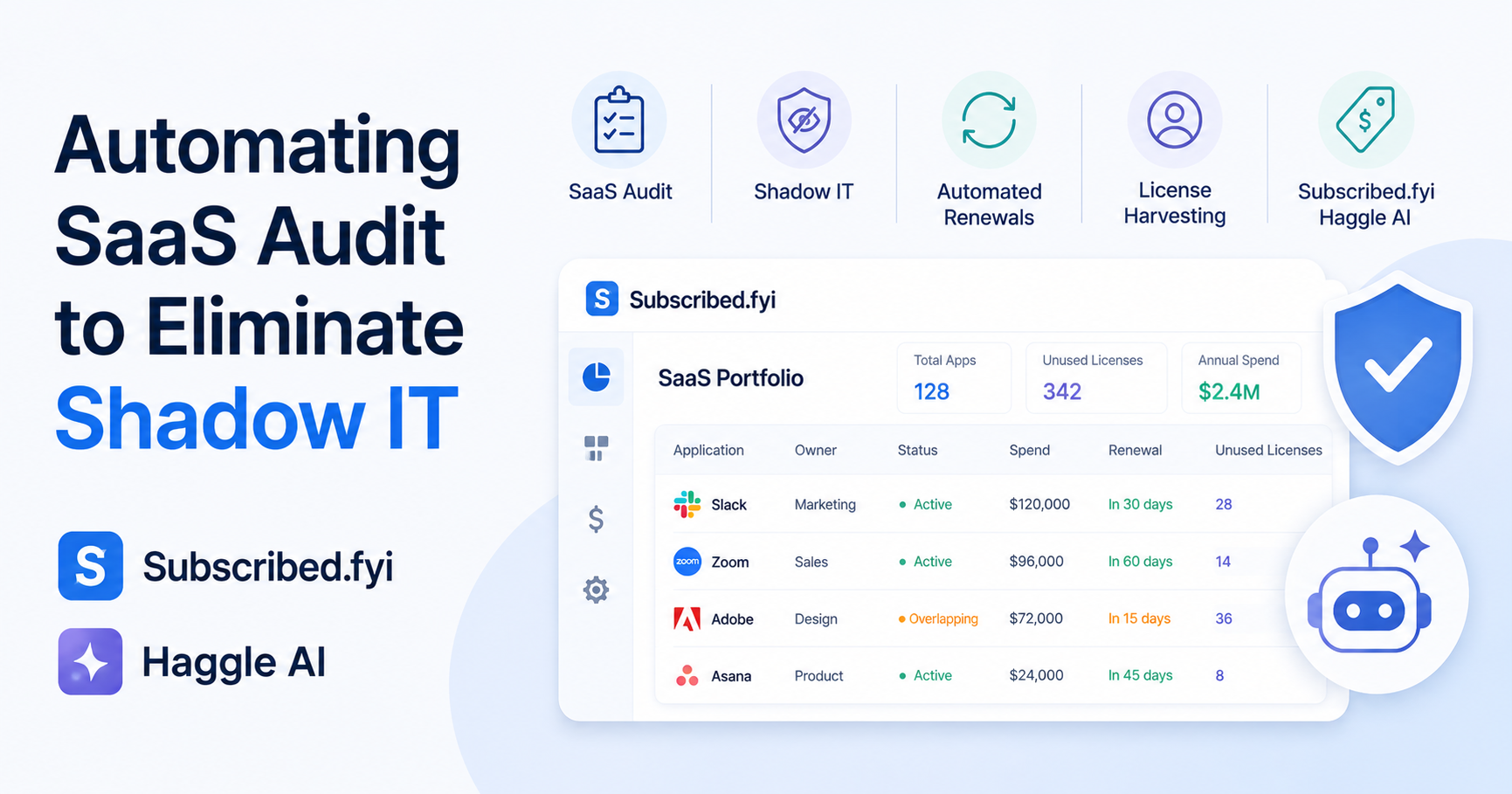
Modern SaaS environments are growing faster than most teams can track. What used to be a manageable spreadsheet has turned into a fragmented system of hidden costs, unused licenses, and unapproved tools. This is where a structured SaaS Audit becomes critical.
Platforms like Subscribed.fyi provide a centralized way to manage subscriptions, uncover Shadow IT, and optimize spending through automation. Instead of reacting to invoices, companies can now proactively control software usage, benchmark costs, and streamline renewals with intelligent automation tools available within Subscribed.fyi.
Why manual SaaS audits no longer work
Spreadsheets fail because SaaS usage is dynamic. Employees sign up for tools without approval. Licenses remain active long after users leave. Finance teams only see costs after they are incurred.
Manual tracking leads to three major issues:
- Lack of real-time visibility
- Inaccurate license usage data
- Missed opportunities for cost optimization
Without automation, companies often discover waste only during quarterly reviews, when it is already too late to act.
What a modern automated SaaS audit looks like
An automated SaaS Audit replaces guesswork with real-time intelligence. It connects directly to your SaaS stack, tracks usage continuously, and flags inefficiencies instantly.
Key capabilities include:
- Real-time license tracking
- Detection of inactive users
- Identification of duplicate tools
- Spend benchmarking across similar companies
Instead of static reports, teams get live insights that support faster decision-making.
Eliminating ghost subscriptions with license harvesting
Ghost subscriptions are one of the biggest sources of SaaS waste. These are paid licenses that no one is actively using.
License Harvesting solves this by automatically identifying inactive accounts and reclaiming them. For example:
- A marketing team pays for 50 seats in a design tool
- Only 32 users are active in the last 30 days
- The system flags 18 unused licenses
- Seats are reassigned or removed before the next billing cycle
This process alone can reduce SaaS spend significantly in many organizations.
Detecting shadow IT before it becomes a risk
Shadow IT refers to software purchased or used without IT approval. It introduces security risks, compliance issues, and unnecessary duplication.
An automated audit platform detects shadow tools by:
- Monitoring employee app usage
- Identifying unapproved subscriptions
- Mapping overlapping tools across departments
For instance, sales and marketing teams may unknowingly use different CRM tools. Automation highlights this overlap, allowing consolidation into a single platform.
Automating renewals and improving cost control
Renewals are often rushed and reactive. Vendors take advantage of this by locking in higher pricing.
With Automated Renewals, companies can:
- Track upcoming contract dates
- Analyze usage before renewal
- Receive alerts months in advance
- Prepare data-driven negotiation strategies
This shifts the process from reactive to strategic and ensures every renewal is backed by real usage insights.
Using benchmarking tools to optimize SaaS spend
One of the most valuable capabilities within Subscribed.fyi is benchmarking. Instead of relying on vendor claims, companies can compare their SaaS costs against industry standards.
This enables teams to:
- Identify overpriced subscriptions
- Understand fair market pricing
- Strengthen negotiation positioning
- Reduce overspending across the stack
By combining benchmarking with usage data, organizations gain a complete picture of where money is being wasted.
Comparing manual vs automated SaaS audit approaches
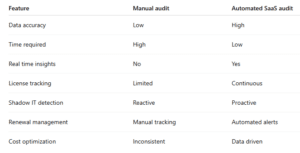
The difference is not incremental. It is transformational.
Real-world use case of automated SaaS governance
A mid-sized tech company with over 120 SaaS tools implemented an automated audit system.
Before automation:
- No visibility into license usage
- Frequent duplicate tools across teams
- Missed renewal deadlines
After implementing an automated framework:
- Reduced unused licenses by 35 percent through License Harvesting
- Consolidated 12 overlapping tools
- Improved renewal outcomes using benchmarking insights
- Eliminated most Shadow IT risks
The result was not just cost savings but also improved operational clarity.
Building your SaaS governance framework
To implement an effective system, follow these steps:
- Centralize all subscriptions into one platform
- Enable real-time usage tracking
- Automate license reclamation workflows
- Set renewal alerts and approval processes
- Use benchmarking tools for negotiation
The goal is to move from visibility to action.
Conclusion
SaaS complexity is only increasing. Companies that rely on manual tracking will continue to lose money through unused licenses, hidden tools, and poor negotiation outcomes.
By adopting an automated SaaS Audit approach with Subscribed.fyi, businesses can eliminate Shadow IT, optimize spend through License Harvesting, and streamline Automated Renewals with built-in intelligence and benchmarking tools.
Automation is no longer optional. It is the foundation of modern SaaS governance.
Site-related links