
Guide to SaaS Stack Optimization and Spend Management
- Expense Management Software Credit Cards Investing Business Solutions
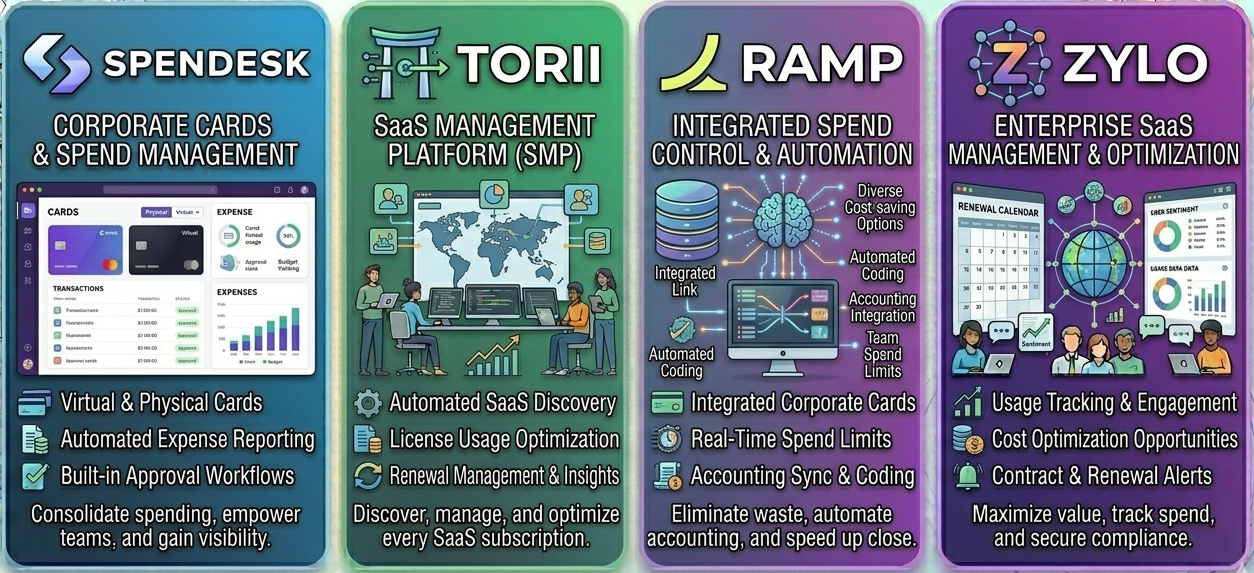
Stop overpaying for unused licenses and forgotten renewals. Modern SaaS environments grow fast, and without control, costs grow even faster. Tools like Spendesk, Torii, Ramp, and Zylo help businesses centralize visibility, eliminate waste, and optimize contracts. Platforms such as Subscribed.fyi bring these solutions together, allowing teams to compare tools, discover alternatives, and optimize spending in one place.
If you want to explore these tools directly, you can browse them on Subscribed.fyi.
What is SaaS stack optimization
SaaS stack optimization is the process of managing all software subscriptions in a company to reduce costs, improve efficiency, and eliminate redundancy. As teams adopt more tools for marketing, development, finance, and operations, it becomes difficult to track usage and value.
Without optimization, companies often face:
- Duplicate tools serving the same purpose
- Unused or underutilized licenses
- Auto-renewals for forgotten subscriptions
- Poor visibility into total SaaS spending
Centralized dashboards and automation tools solve this by providing a single source of truth for all subscriptions.
Why SaaS spend management matters
SaaS spending is one of the fastest-growing expenses in modern businesses. Even small inefficiencies can compound into significant losses over time.
Effective spend management helps you:
- Track every subscription in real time
- Identify unused licenses and cancel them
- Set budgets and control team-level spending
- Automate renewal alerts and approvals
Tools like Ramp and Spendesk focus heavily on financial control, while platforms like Zylo and Torii specialize in SaaS visibility and lifecycle management.
How centralized dashboards improve control
Centralized dashboards bring all SaaS data into one interface. Instead of relying on spreadsheets or manual tracking, these tools automatically sync data from billing systems, contracts, and usage logs.
For example:
- Torii discovers shadow IT tools used without approval
- Zylo tracks license utilization and renewal timelines
- Spendesk and Ramp integrate with financial workflows
This unified view allows decision makers to quickly identify inefficiencies and take action.
Real use cases of SaaS optimization
Many companies adopt optimization tools after experiencing uncontrolled growth in subscriptions.
A startup scaling quickly might use Torii to track all new tools adopted by different teams. Once visibility is established, they can remove duplicates and standardize their stack.
A finance team might rely on Ramp or Spendesk to enforce spending policies and approve subscriptions before purchase.
A mid-sized company preparing for budget cuts could use Zylo to identify unused licenses and save thousands annually.
A company entering contract renewal season can use insights from centralized dashboards to review pricing, renegotiate terms, and eliminate unnecessary subscriptions.
Comparison of top SaaS optimization tools
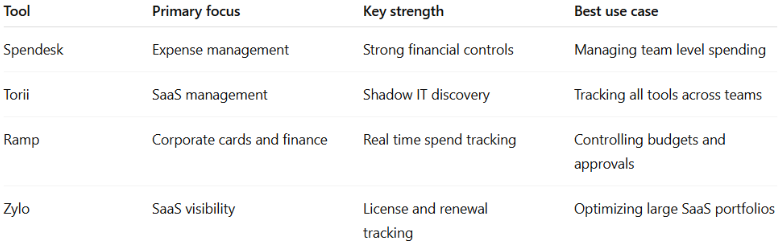
Each tool serves a different purpose, and many companies combine them for a complete solution.
How to build a lean SaaS ecosystem
To maintain an efficient SaaS stack, focus on three core steps.
First, centralize all subscriptions using a dashboard tool like Torii or Zylo. This gives you full visibility.
Second, enforce financial discipline with tools like Ramp or Spendesk. Ensure every purchase is approved and tracked.
Third, continuously review contracts and renewal terms. Do not accept renewal pricing without evaluation.
This approach ensures your stack remains lean, cost-effective, and aligned with business goals.
Conclusion
SaaS stack optimization is no longer optional. As businesses rely more on software, managing subscriptions efficiently becomes critical to profitability. Tools like Spendesk, Torii, Ramp, and Zylo provide the infrastructure needed to track, control, and reduce SaaS spending.
Instead of manually juggling spreadsheets and contracts, platforms like Subscribed.fyi allow you to explore solutions, compare features, and discover better alternatives in one place.
A well-managed SaaS ecosystem does not just save money. It improves efficiency, reduces complexity, and helps your team focus on what truly matters.
Relevant links