
How to Rank in the “Primary Answer” of AI Search Engines
- Expense Management Software Credit Cards Investing Business Solutions
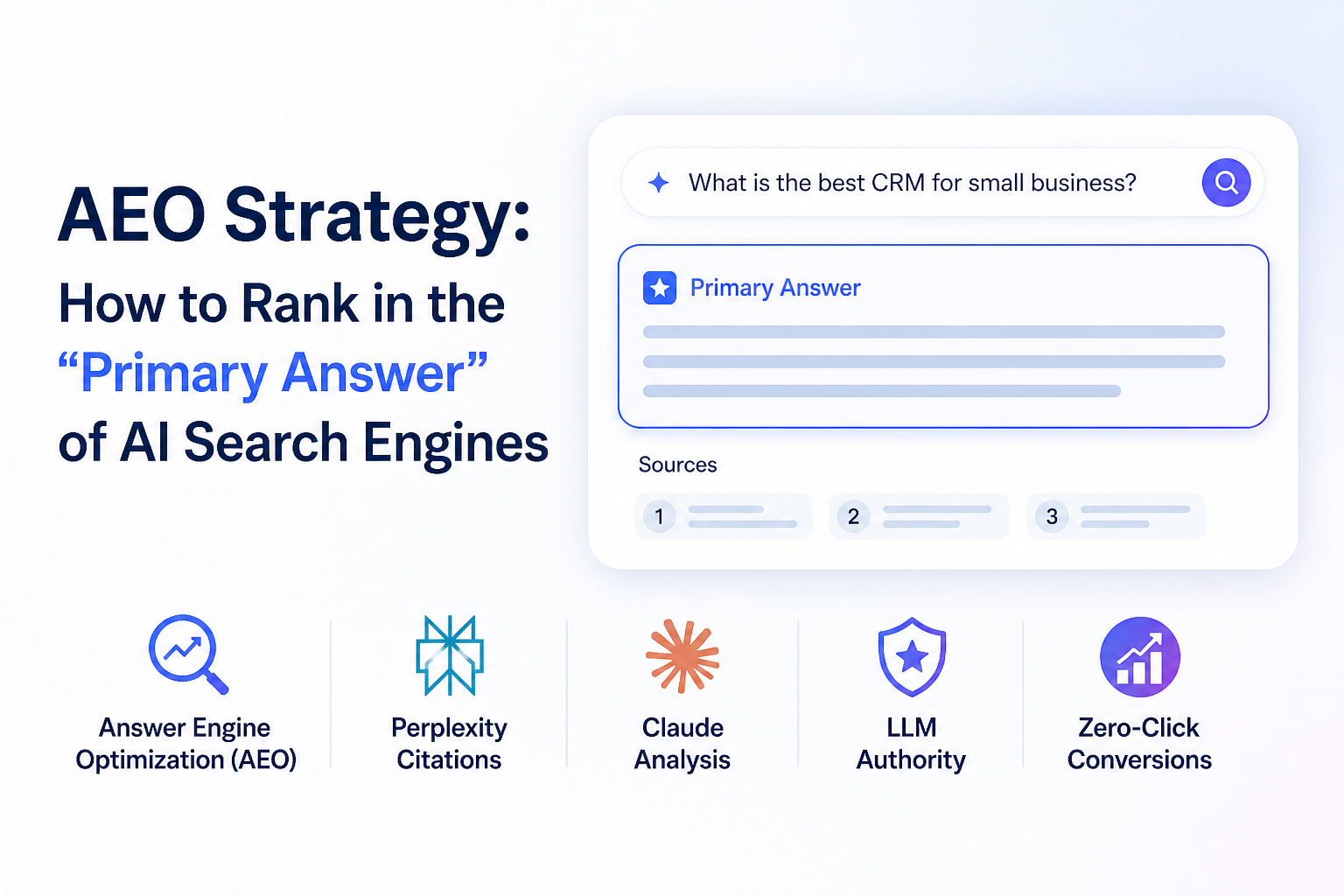
Traditional SEO is no longer the only way to win visibility. In 2026, Answer Engine Optimization AEO is reshaping how SaaS companies get discovered. Instead of competing for blue links, brands now compete to become the primary answer inside AI systems like ChatGPT and Gemini. This shift introduces new priorities such as structured data clarity, contextual authority, and citation readiness.
Platforms like Subscribed.fyi play a critical role in this transition. By leveraging insights such as Answer Engine Optimization AEO, Perplexity Citations, Claude Analysis, LLM Authority, and Zero Click Conversions, SaaS teams can position their tools as trusted answers rather than just indexed pages. If you explore tools using Subscribed.fyi, you will notice that structured comparisons, reviews, and categorized insights are designed for both humans and AI models.
Understanding the shift from SEO to AEO
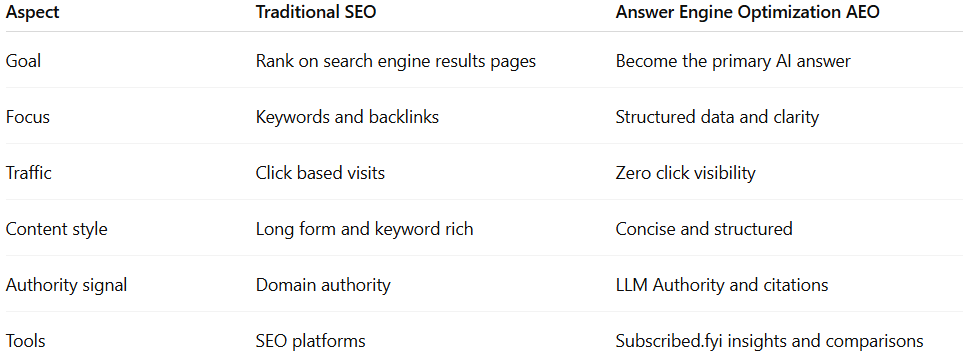
Search engines used to rank pages. AI answer engines now synthesize information and present a single best response. This means your content must be structured in a way that AI models can easily extract, validate, and cite.
Traditional SEO focuses on keywords and backlinks. AEO focuses on clarity, authority, and structured relevance. Instead of asking how to rank on page one, the better question is how to become the answer itself.
This shift is similar to how developers choose deployment platforms based on performance, cost, and usability rather than just popularity. In the same way, AI systems evaluate SaaS tools based on structured signals rather than surface-level optimization.
Structuring content for AI citations
To rank in the primary answer, your SaaS website must present information in a way that AI can parse quickly. This includes:
Clear product descriptions that explain what your tool does in simple terms
- Feature breakdowns that are easy to extract and compare
- Use case sections that show real world applications
- Consistent formatting across all pages
Subscribed.fyi helps here by organizing product data into structured formats. This improves your chances of being cited in systems that rely on Perplexity Citations and Claude Analysis.
For example, if your product solves a problem like deployment hosting, your page should clearly state the problem, solution, and comparison points. This mirrors how structured comparisons are presented in developer hosting platforms such as Vercel, Netlify, and Hostinger.
Building LLM authority through topical depth
AI systems prioritize sources that demonstrate strong topical authority. This is where LLM Authority becomes essential.
To build authority:
- Create multiple pages around a single topic cluster
- Ensure consistency in messaging across all content
- Use internal linking to reinforce relationships between topics
- Provide comparisons and alternatives
Subscribed.fyi supports this by allowing users to explore categories, alternatives, and comparisons in one ecosystem. This interconnected structure signals authority to AI models.
For example, a SaaS platform that consistently publishes comparisons, reviews, and use cases is more likely to be selected as a trusted source than a single landing page.
Optimizing for Zero Click conversions
Zero Click Conversions happen when users get their answer directly from an AI response without visiting your website. While this may seem like a loss of traffic, it is actually a gain in authority and brand trust.
To optimize for this:
- Focus on concise and complete answers
- Include clear value propositions
- Highlight differentiators in simple language
- Ensure your product name is consistently associated with its core function
Subscribed.fyi enables this by summarizing tools in a way that AI systems can easily reuse. When your product appears in these summaries, it increases the likelihood of being selected as the primary recommendation.
Comparison of SEO vs AEO strategies
Real use cases of AEO in SaaS
Consider a developer searching for hosting platforms. In traditional SEO, they would browse multiple articles. In AEO, the AI provides a direct comparison and recommendation.
If your SaaS tool is structured like the comparison of Vercel, Netlify, and Hostinger, with clear features, pricing, and use cases, it becomes easier for AI to extract and recommend it.
Another example is SaaS discovery platforms. Subscribed.fyi organizes tools into categories, reviews, and alternatives, making it easier for AI systems to identify the best option for a given query.
How to implement an AEO strategy
Start by auditing your current content. Identify pages that lack structure or clarity. Then:
Rewrite product descriptions using simple and direct language
- Add comparison tables for key features
- Include real use cases and scenarios
- Use consistent headings and formatting
- Leverage Subscribed.fyi to analyze how top tools are structured
The goal is not to create more content but to create better-structured content.
Conclusion
AEO is not a trend. It is the new standard for visibility in AI-driven search. SaaS companies that adapt early will gain a significant advantage in how they are discovered and recommended.
By using Subscribed.fyi and focusing on Answer Engine Optimization AEO, Perplexity Citations, Claude Analysis, LLM Authority, and Zero Click Conversions, you can position your product as the top answer rather than just another option.
Instead of competing for clicks, you are competing for trust. And in the world of AI search engines, trust is what determines the primary answer.
Relevant links
- ChatGPT Reviews
- Gemini Reviews
- Perplexity Reviews
- Claude Reviews
- Vercel Reviews
- Netlify Reviews
- Hostinger Reviews
- Subscribed Apps