Project management tools like , Notion, Basecamp, Lark, Slack, Asana and Trello.
AI chatbot tools like ChatGPT, Grok, Perplexity, Claude, Gemini and Copilot.
Marketing analytics platforms like Google Analytics, Similarweb and Semrush.
CRM systems like HubSpot, Apollo.io Pipedrive, Zoho CRM, and Salesforce.
VPNs, SSO providers, and password managers like NordVPN, Okta, and LastPass.
Email marketing and campaign tools like MailerLite, Instantly, and Mailchimp.
Website builders, hosting tools like Hostinger, Webflow, Framer, and Shopify
HR and recruiting software like ATS platforms, BambooHR, Workday, and Lever.
Automate finances with confidence like Quickbooks, Stripe, Brex, and Mercury.
Design and editing tools like Figma, Canva, Adobe Creative Cloud, CapCut.
Workflow automation tools like Zapier, Make, Clay, and Reclaim.ai.
No-code and AI-native dev tools like Cursor, Windsurf, Lovable and Bubble.

Chroma’s biggest strength is its simplicity and developer-first design. It makes it easy to go from prototype to production by offering both local and cloud deployment options with minimal setup. Its strong focus on retrieval use cases, especially RAG, makes it highly relevant in modern AI stacks.
However, Chroma is not a complete AI platform. It lacks built-in orchestration, training pipelines, or advanced enterprise tooling found in larger platforms. Performance can also depend heavily on memory availability in self-hosted environments. Overall, Chroma is best suited as a specialized retrieval layer rather than an all-in-one solution.
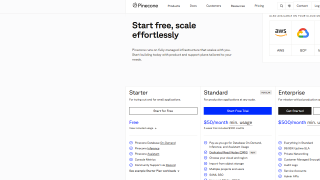
Pinecone’s main strength is its simplicity and performance. By offering a fully managed, serverless vector database, it removes the operational burden of scaling and maintaining infrastructure. This makes it particularly appealing for teams building production AI applications quickly.
However, this convenience comes with trade-offs. Pricing can become significant at scale due to usage-based billing across storage, queries, and embedding operations. Additionally, being a closed-source platform limits customization compared to open-source alternatives.
Overall, Pinecone is best suited for teams prioritizing speed, reliability, and ease of deployment over full control and cost predictability.