Project management tools like , Notion, Basecamp, Lark, Slack, Asana and Trello.
AI chatbot tools like ChatGPT, Grok, Perplexity, Claude, Gemini and Copilot.
Marketing analytics platforms like Google Analytics, Similarweb and Semrush.
CRM systems like HubSpot, Apollo.io Pipedrive, Zoho CRM, and Salesforce.
VPNs, SSO providers, and password managers like NordVPN, Okta, and LastPass.
Email marketing and campaign tools like MailerLite, Instantly, and Mailchimp.
Website builders, hosting tools like Hostinger, Webflow, Framer, and Shopify
HR and recruiting software like ATS platforms, BambooHR, Workday, and Lever.
Automate finances with confidence like Quickbooks, Stripe, Brex, and Mercury.
Design and editing tools like Figma, Canva, Adobe Creative Cloud, CapCut.
Workflow automation tools like Zapier, Make, Clay, and Reclaim.ai.
No-code and AI-native dev tools like Cursor, Windsurf, Lovable and Bubble.

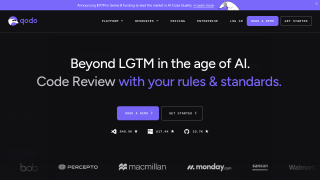
Qodo offers AI code reviews with 64.3% F1 score, multi-repo context, 1-click fixes, test gen, and custom rules. Integrates IDE/Git/CLI for enterprise teams. Pricing not public; contact sales likely. Strong performance in precision/recall. Customer support via enterprise channels; cost-effective for scaling code quality in AI dev.
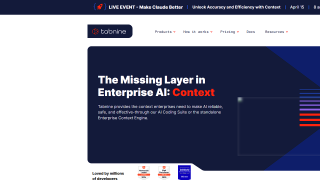
Tabnine’s biggest strength is its privacy-first architecture and deployment flexibility. The ability to run models locally or in secure environments makes it a top choice for enterprises handling sensitive codebases. Its governance features and auditability also give organizations more control compared to typical AI coding tools.
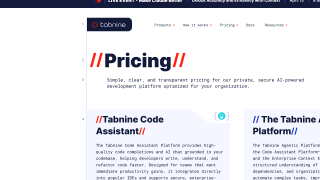
However, compared to newer AI coding agents, Tabnine can feel less advanced in terms of creativity and autonomous capabilities. Its pricing and complexity may also be barriers for smaller teams. It performs best in enterprise environments where security, compliance, and control outweigh the need for cutting-edge generative features.