Project management tools like , Notion, Basecamp, Lark, Slack, Asana and Trello.
AI chatbot tools like ChatGPT, Grok, Perplexity, Claude, Gemini and Copilot.
Marketing analytics platforms like Google Analytics, Similarweb and Semrush.
CRM systems like HubSpot, Apollo.io Pipedrive, Zoho CRM, and Salesforce.
VPNs, SSO providers, and password managers like NordVPN, Okta, and LastPass.
Email marketing and campaign tools like MailerLite, Instantly, and Mailchimp.
Website builders, hosting tools like Hostinger, Webflow, Framer, and Shopify
HR and recruiting software like ATS platforms, BambooHR, Workday, and Lever.
Automate finances with confidence like Quickbooks, Stripe, Brex, and Mercury.
Design and editing tools like Figma, Canva, Adobe Creative Cloud, CapCut.
Workflow automation tools like Zapier, Make, Clay, and Reclaim.ai.
No-code and AI-native dev tools like Cursor, Windsurf, Lovable and Bubble.

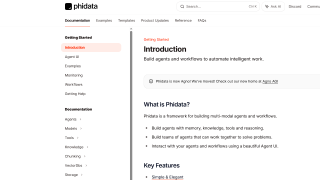
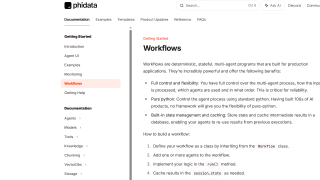
Phidata stands out as a clean, developer-first framework for building agentic AI systems. Its biggest strength is its modular design, allowing developers to combine models, tools, and memory into flexible, production-ready agents. The ability to orchestrate multiple agents and workflows gives it strong potential for complex automation use cases.
However, it is not beginner-friendly. Compared to visual tools or managed platforms, Phidata requires more engineering effort and infrastructure setup. Its ecosystem is also smaller than competitors like LangChain, which may limit available integrations and community support. Overall, Phidata is best suited for developers who want deep control over agent behavior rather than ease of use.
CrewAI’s main strength is its focus on multi-agent collaboration. It provides a powerful abstraction for building systems where multiple AI agents work together, making it ideal for complex, reasoning-heavy tasks. Its open-source nature also offers flexibility and transparency that many proprietary platforms lack.
However, this flexibility comes with complexity. Developers must understand agent orchestration, memory systems, and workflow design. Additionally, while the open-source version is free, costs can escalate when using managed services or high execution volumes.
Overall, CrewAI is best suited for advanced AI applications where coordination between multiple agents is required, rather than simple automation or single-agent tasks.