Project management tools like , Notion, Basecamp, Lark, Slack, Asana and Trello.
AI chatbot tools like ChatGPT, Grok, Perplexity, Claude, Gemini and Copilot.
Marketing analytics platforms like Google Analytics, Similarweb and Semrush.
CRM systems like HubSpot, Apollo.io Pipedrive, Zoho CRM, and Salesforce.
VPNs, SSO providers, and password managers like NordVPN, Okta, and LastPass.
Email marketing and campaign tools like MailerLite, Instantly, and Mailchimp.
Website builders, hosting tools like Hostinger, Webflow, Framer, and Shopify
HR and recruiting software like ATS platforms, BambooHR, Workday, and Lever.
Automate finances with confidence like Quickbooks, Stripe, Brex, and Mercury.
Design and editing tools like Figma, Canva, Adobe Creative Cloud, CapCut.
Workflow automation tools like Zapier, Make, Clay, and Reclaim.ai.
No-code and AI-native dev tools like Cursor, Windsurf, Lovable and Bubble.

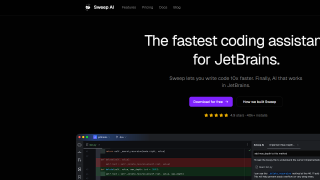
Sweep’s biggest advantage is its deep focus on the JetBrains ecosystem. By leveraging native indexing and optimizing for speed, it delivers highly responsive and context-aware coding assistance that feels tightly integrated into the developer workflow. Its near-instant autocomplete and next-edit predictions are particularly strong differentiators.
However, its specialization is also its limitation. Developers using VS Code or other environments may find better-supported alternatives elsewhere. Additionally, while Sweep includes agent-like capabilities, it is still evolving compared to more advanced autonomous coding tools. It is best suited for JetBrains users who want fast, reliable AI assistance without leaving their IDE.
Continue.dev stands out for its flexibility, open-source nature, and deep integration into the development lifecycle. Its ability to connect to multiple models and run locally makes it particularly attractive for teams concerned about privacy and vendor dependency. The addition of agent-based workflows and CI/CD integration elevates it beyond simple coding assistants.
However, this flexibility comes with complexity. The setup process and learning curve can be a barrier for beginners, and the overall user experience is less polished than commercial alternatives. It is best suited for developers and teams who value control, customization, and long-term scalability over simplicity.