Project management tools like , Notion, Basecamp, Lark, Slack, Asana and Trello.
AI chatbot tools like ChatGPT, Grok, Perplexity, Claude, Gemini and Copilot.
Marketing analytics platforms like Google Analytics, Similarweb and Semrush.
CRM systems like HubSpot, Apollo.io Pipedrive, Zoho CRM, and Salesforce.
VPNs, SSO providers, and password managers like NordVPN, Okta, and LastPass.
Email marketing and campaign tools like MailerLite, Instantly, and Mailchimp.
Website builders, hosting tools like Hostinger, Webflow, Framer, and Shopify
HR and recruiting software like ATS platforms, BambooHR, Workday, and Lever.
Automate finances with confidence like Quickbooks, Stripe, Brex, and Mercury.
Design and editing tools like Figma, Canva, Adobe Creative Cloud, CapCut.
Workflow automation tools like Zapier, Make, Clay, and Reclaim.ai.
No-code and AI-native dev tools like Cursor, Windsurf, Lovable and Bubble.

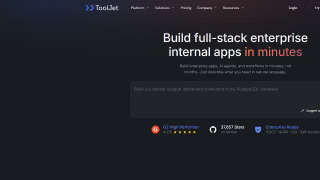
ToolJet’s biggest strength is its flexibility. It blends no-code simplicity with developer-level control, allowing teams to start with AI-generated apps and refine them using code when needed. Its open-source nature and self-hosting capabilities make it especially appealing for organizations that prioritize data ownership and customization.
However, it is not as beginner-friendly as some no-code tools. Users may need technical knowledge to fully leverage integrations, workflows, and custom logic. The interface, while functional, may also feel less refined compared to more mature competitors.
Overall, ToolJet is best suited for teams building internal tools at scale, especially when flexibility, control, and integration capabilities are more important than ease of use.
Retool is a low-code development platform enabling developers to build internal tools rapidly using a drag-and-drop interface, AI assistance, and robust integration options with databases and APIs (e.g., MySQL, Google Sheets). It supports customization through JavaScript and Python, ensuring flexibility for complex workflows. Pricing starts at $10/user/month, scaling with team size and features.
Compared to alternatives like OutSystems or Bubble, Retool is preferred for developers needing seamless integrations and app deployment capabilities. However, its pricing may deter smaller teams, and its legacy mobile builder lacks flexibility.
Customer support is highly rated, reinforced with strong community resources. Retool balances cost-effectiveness and performance well for growing teams but may not suit no-code users as effectively as Bubble.