Project management tools like , Notion, Basecamp, Lark, Slack, Asana and Trello.
AI chatbot tools like ChatGPT, Grok, Perplexity, Claude, Gemini and Copilot.
Marketing analytics platforms like Google Analytics, Similarweb and Semrush.
CRM systems like HubSpot, Apollo.io Pipedrive, Zoho CRM, and Salesforce.
VPNs, SSO providers, and password managers like NordVPN, Okta, and LastPass.
Email marketing and campaign tools like MailerLite, Instantly, and Mailchimp.
Website builders, hosting tools like Hostinger, Webflow, Framer, and Shopify
HR and recruiting software like ATS platforms, BambooHR, Workday, and Lever.
Automate finances with confidence like Quickbooks, Stripe, Brex, and Mercury.
Design and editing tools like Figma, Canva, Adobe Creative Cloud, CapCut.
Workflow automation tools like Zapier, Make, Clay, and Reclaim.ai.
No-code and AI-native dev tools like Cursor, Windsurf, Lovable and Bubble.
Chat to find tools, compare options,
Discover the best-performing
Manage profile with subsig, and
unlock 23+ social and review monitoring. Get partnership options with
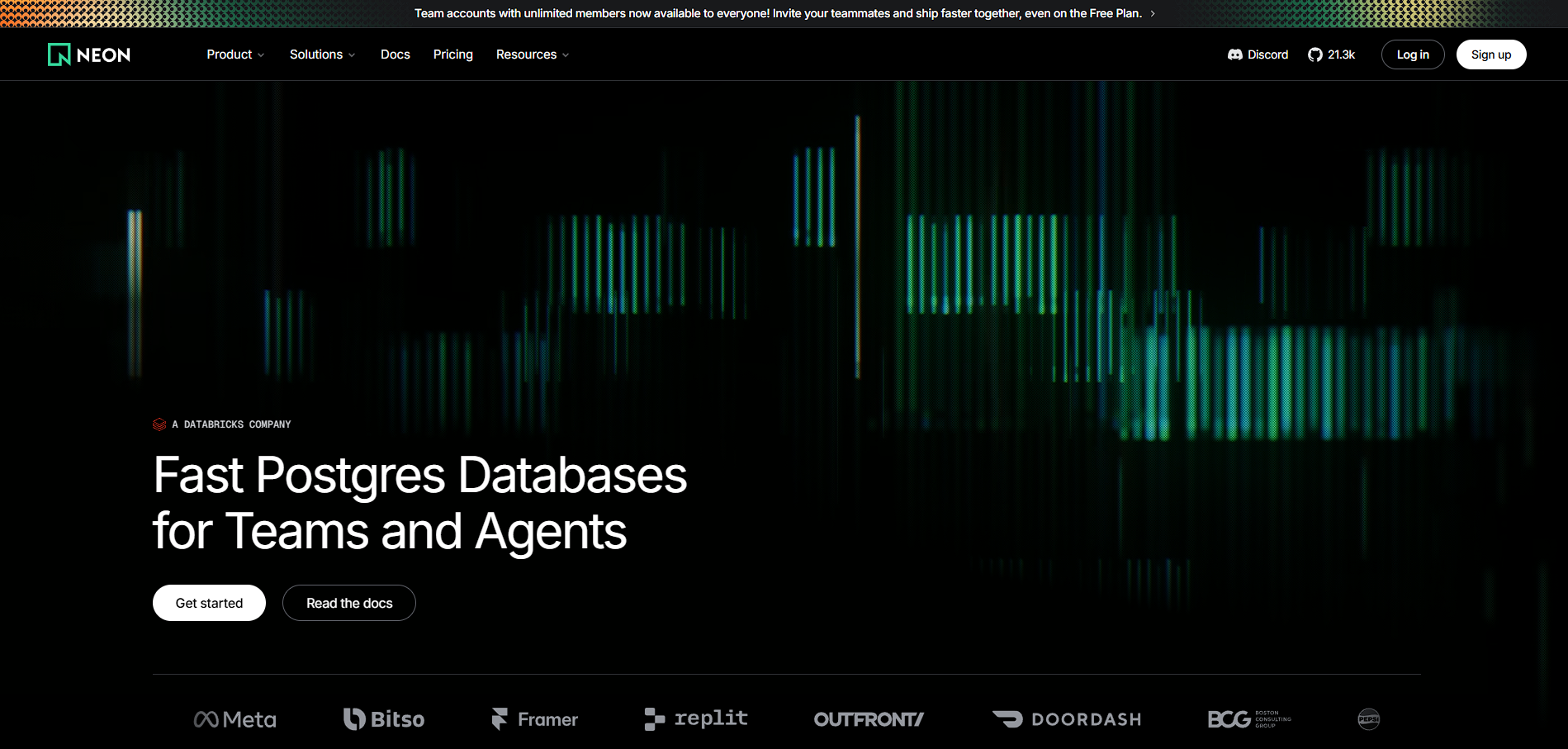
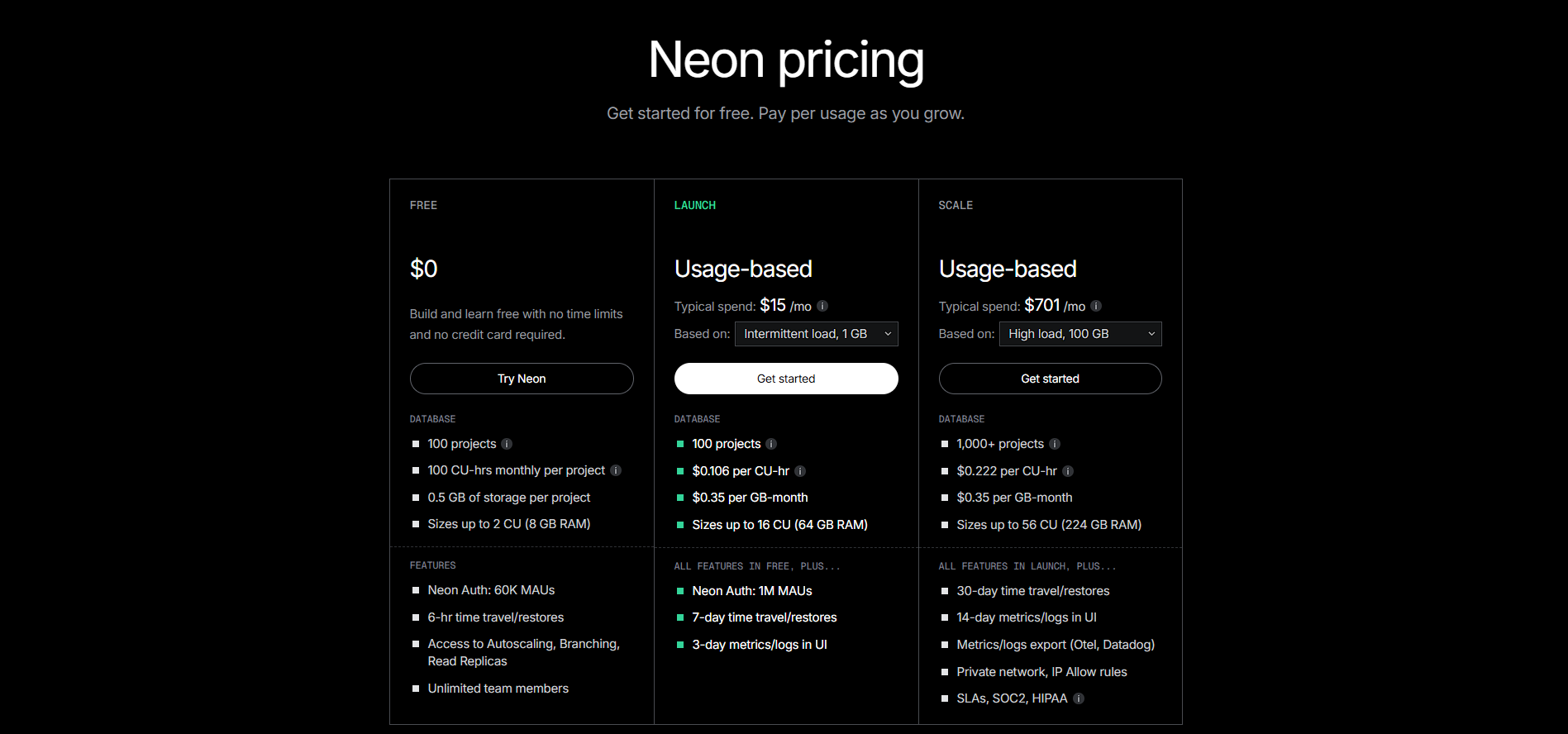
Neon is a modern, serverless PostgreSQL platform designed to simplify database infrastructure for developers. It separates compute and storage into independent layers, allowing databases to scale dynamically based on demand and even shut down when not in use to save costs.
One of Neon’s defining features is its branching system, which allows developers to create instant copies of databases for testing, development, or experimentation. This brings version-control-like workflows to databases, enabling safer schema changes and faster iteration without affecting production systems.
Neon is positioned as a developer-first alternative to traditional managed databases like AWS RDS or Aurora. It is particularly popular for modern applications, serverless backends, and AI-driven systems where scalability, flexibility, and cost efficiency are critical.
Key Features and Benefits
Who Can Benefit from Neon
Looking for alternative solutions?
Alternatives include Supabase for a full backend platform (auth, storage), PlanetScale for MySQL-based scalability, and AWS Aurora for enterprise-grade managed databases. Each differs in architecture, pricing, and feature scope.
Neon is a modern, serverless PostgreSQL platform designed to simplify database infrastructure for developers. It separates compute and storage into independent layers, allowing databases to scale dynamically based on demand and even shut down when not in use to save costs.
One of Neon’s defining features is its branching system, which allows developers to create instant copies of databases for testing, development, or experimentation. This brings version-control-like workflows to databases, enabling safer schema changes and faster iteration without affecting production systems.
Neon is positioned as a developer-first alternative to traditional managed databases like AWS RDS or Aurora. It is particularly popular for modern applications, serverless backends, and AI-driven systems where scalability, flexibility, and cost efficiency are critical.
Key Features and Benefits
Who Can Benefit from Neon
Looking for alternative solutions?
Alternatives include Supabase for a full backend platform (auth, storage), PlanetScale for MySQL-based scalability, and AWS Aurora for enterprise-grade managed databases. Each differs in architecture, pricing, and feature scope.
Learn what people say about Neon Database
Be the first to share your experience and help others in the community.
Neon is a modern, serverless PostgreSQL platform designed to simplify database infrastructure for developers. It separates compute and storage into independent layers, allowing databases to scale dynamically based on demand and even shut down when not in use to save costs.
One of Neon’s defining features is its branching system, which allows developers to create instant copies of databases for testing, development, or experimentation. This brings version-control-like workflows to databases, enabling safer schema changes and faster iteration without affecting production systems.
Neon is positioned as a developer-first alternative to traditional managed databases like AWS RDS or Aurora. It is particularly popular for modern applications, serverless backends, and AI-driven systems where scalability, flexibility, and cost efficiency are critical.
Key Features and Benefits
Who Can Benefit from Neon
Looking for alternative solutions?
Alternatives include Supabase for a full backend platform (auth, storage), PlanetScale for MySQL-based scalability, and AWS Aurora for enterprise-grade managed databases. Each differs in architecture, pricing, and feature scope.
Want to list your product on Subscribed.fyi? Create a profile to reach more buyers.