Project management tools like , Notion, Basecamp, Lark, Slack, Asana and Trello.
AI chatbot tools like ChatGPT, Grok, Perplexity, Claude, Gemini and Copilot.
Marketing analytics platforms like Google Analytics, Similarweb and Semrush.
CRM systems like HubSpot, Apollo.io Pipedrive, Zoho CRM, and Salesforce.
VPNs, SSO providers, and password managers like NordVPN, Okta, and LastPass.
Email marketing and campaign tools like MailerLite, Instantly, and Mailchimp.
Website builders, hosting tools like Hostinger, Webflow, Framer, and Shopify
HR and recruiting software like ATS platforms, BambooHR, Workday, and Lever.
Automate finances with confidence like Quickbooks, Stripe, Brex, and Mercury.
Design and editing tools like Figma, Canva, Adobe Creative Cloud, CapCut.
Workflow automation tools like Zapier, Make, Clay, and Reclaim.ai.
No-code and AI-native dev tools like Cursor, Windsurf, Lovable and Bubble.

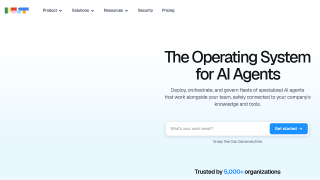
Dust’s main strength is its ability to turn AI into a practical, integrated part of daily work rather than a standalone tool. By connecting directly to company data and systems, it enables agents to provide context-aware outputs and take meaningful actions. Its no-code approach also lowers the barrier for non-technical teams.
However, its value depends heavily on proper integration and setup. Without connecting relevant data sources, the platform’s capabilities are limited. Additionally, as organizations scale usage, managing multiple agents and workflows can become complex. Dust is best suited for mid-to-large teams looking to operationalize AI across their organization rather than individual users seeking a simple AI assistant.
AutoGen’s biggest strength is its native support for multi-agent systems. It provides a powerful abstraction for building AI “teams” that can collaborate, reason, and execute tasks more effectively than single-agent setups. This makes it ideal for complex workflows like coding agents, research assistants, and autonomous systems.
However, the framework is highly technical and requires a deep understanding of AI systems, prompting, and architecture design. Additionally, as Microsoft evolves its ecosystem, newer frameworks like the Microsoft Agent Framework are beginning to supersede AutoGen in enterprise contexts, which may impact long-term adoption.
Overall, AutoGen is best suited for developers building advanced, agent-based AI systems where collaboration and orchestration are essential.