Project management tools like , Notion, Basecamp, Lark, Slack, Asana and Trello.
AI chatbot tools like ChatGPT, Grok, Perplexity, Claude, Gemini and Copilot.
Marketing analytics platforms like Google Analytics, Similarweb and Semrush.
CRM systems like HubSpot, Apollo.io Pipedrive, Zoho CRM, and Salesforce.
VPNs, SSO providers, and password managers like NordVPN, Okta, and LastPass.
Email marketing and campaign tools like MailerLite, Instantly, and Mailchimp.
Website builders, hosting tools like Hostinger, Webflow, Framer, and Shopify
HR and recruiting software like ATS platforms, BambooHR, Workday, and Lever.
Automate finances with confidence like Quickbooks, Stripe, Brex, and Mercury.
Design and editing tools like Figma, Canva, Adobe Creative Cloud, CapCut.
Workflow automation tools like Zapier, Make, Clay, and Reclaim.ai.
No-code and AI-native dev tools like Cursor, Windsurf, Lovable and Bubble.
Chat to find tools, compare options,
Discover the best-performing
Manage profile with subsig, and
unlock 23+ social and review monitoring. Get partnership options with
Dust is an enterprise-focused AI agent platform designed to help organizations build “AI teammates” that can access internal knowledge, perform tasks, and automate workflows. Instead of acting as a standalone chatbot, Dust connects directly to company systems like Slack, Notion, Google Drive, and GitHub, allowing agents to operate with real business context.
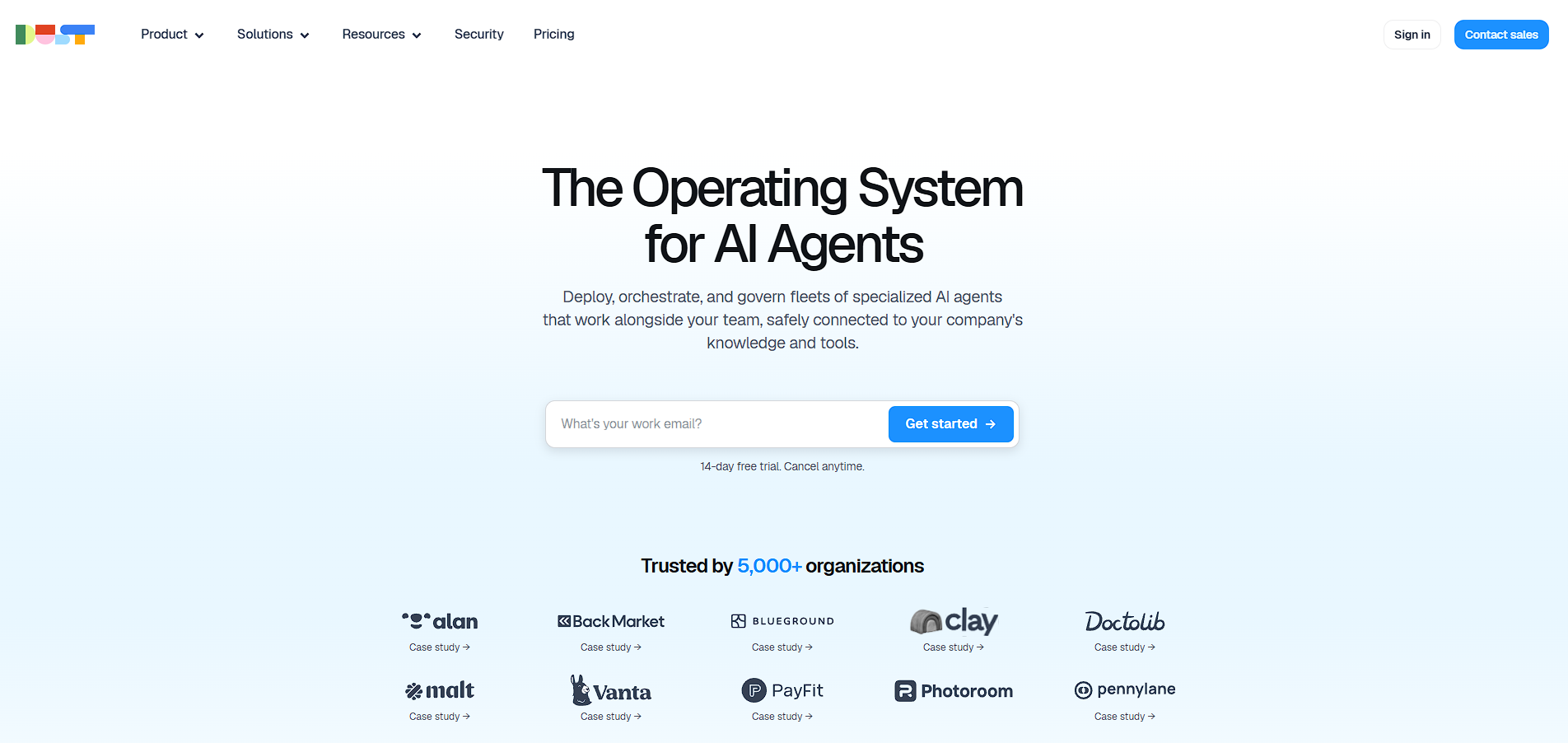
The platform is positioned as an “operating system for AI agents,” where teams can create, orchestrate, and manage multiple specialized agents across departments. These agents can answer questions, generate content, analyze data, and even take actions using connected tools, making them more functional than traditional AI assistants.
In practice, organizations use Dust to break down knowledge silos and improve productivity. Teams can deploy agents for tasks like customer support, marketing content generation, internal documentation search, and workflow automation, all within a unified workspace that integrates with existing tools.
Key Features and Benefits
Who Can Benefit from Dust
Looking for alternative solutions?
If you are exploring similar AI agent platforms, tools like LangChain, AutoGen, and AgentOps offer overlapping capabilities in building, orchestrating, or monitoring AI agents, though with different levels of abstraction and technical complexity.

Dust is an enterprise-focused AI agent platform designed to help organizations build “AI teammates” that can access internal knowledge, perform tasks, and automate workflows. Instead of acting as a standalone chatbot, Dust connects directly to company systems like Slack, Notion, Google Drive, and GitHub, allowing agents to operate with real business context.
The platform is positioned as an “operating system for AI agents,” where teams can create, orchestrate, and manage multiple specialized agents across departments. These agents can answer questions, generate content, analyze data, and even take actions using connected tools, making them more functional than traditional AI assistants.
In practice, organizations use Dust to break down knowledge silos and improve productivity. Teams can deploy agents for tasks like customer support, marketing content generation, internal documentation search, and workflow automation, all within a unified workspace that integrates with existing tools.
Key Features and Benefits
Who Can Benefit from Dust
Looking for alternative solutions?
If you are exploring similar AI agent platforms, tools like LangChain, AutoGen, and AgentOps offer overlapping capabilities in building, orchestrating, or monitoring AI agents, though with different levels of abstraction and technical complexity.

Learn what people say about Dust
Be the first to share your experience and help others in the community.
Dust is an enterprise-focused AI agent platform designed to help organizations build “AI teammates” that can access internal knowledge, perform tasks, and automate workflows. Instead of acting as a standalone chatbot, Dust connects directly to company systems like Slack, Notion, Google Drive, and GitHub, allowing agents to operate with real business context.
The platform is positioned as an “operating system for AI agents,” where teams can create, orchestrate, and manage multiple specialized agents across departments. These agents can answer questions, generate content, analyze data, and even take actions using connected tools, making them more functional than traditional AI assistants.
In practice, organizations use Dust to break down knowledge silos and improve productivity. Teams can deploy agents for tasks like customer support, marketing content generation, internal documentation search, and workflow automation, all within a unified workspace that integrates with existing tools.
Key Features and Benefits
Who Can Benefit from Dust
Looking for alternative solutions?
If you are exploring similar AI agent platforms, tools like LangChain, AutoGen, and AgentOps offer overlapping capabilities in building, orchestrating, or monitoring AI agents, though with different levels of abstraction and technical complexity.
Want to list your product on Subscribed.fyi? Create a profile to reach more buyers.