Project management tools like , Notion, Basecamp, Lark, Slack, Asana and Trello.
AI chatbot tools like ChatGPT, Grok, Perplexity, Claude, Gemini and Copilot.
Marketing analytics platforms like Google Analytics, Similarweb and Semrush.
CRM systems like HubSpot, Apollo.io Pipedrive, Zoho CRM, and Salesforce.
VPNs, SSO providers, and password managers like NordVPN, Okta, and LastPass.
Email marketing and campaign tools like MailerLite, Instantly, and Mailchimp.
Website builders, hosting tools like Hostinger, Webflow, Framer, and Shopify
HR and recruiting software like ATS platforms, BambooHR, Workday, and Lever.
Automate finances with confidence like Quickbooks, Stripe, Brex, and Mercury.
Design and editing tools like Figma, Canva, Adobe Creative Cloud, CapCut.
Workflow automation tools like Zapier, Make, Clay, and Reclaim.ai.
No-code and AI-native dev tools like Cursor, Windsurf, Lovable and Bubble.
Chat to find tools, compare options,
Discover the best-performing
Manage profile with subsig, and
unlock 23+ social and review monitoring. Get partnership options with
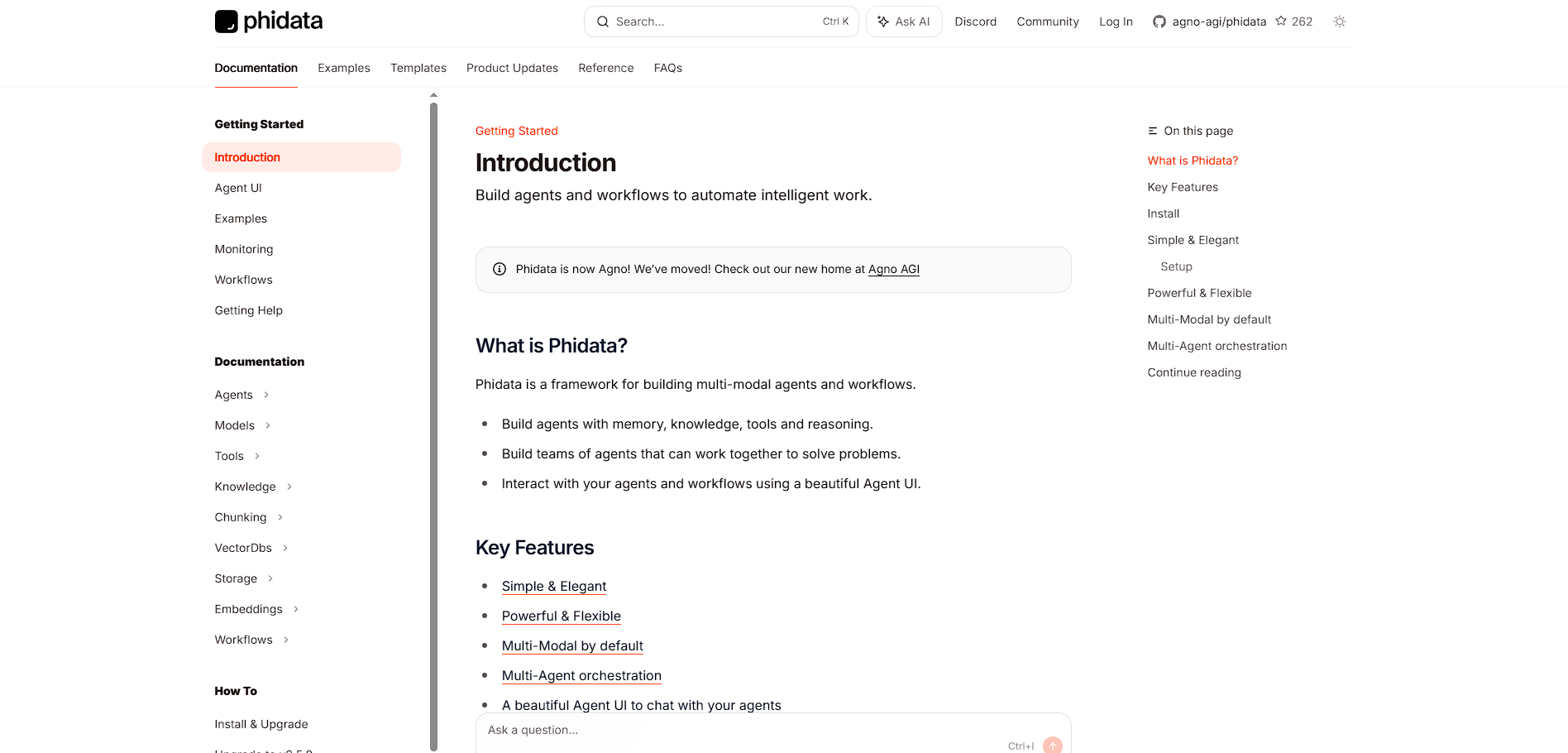
Phidata is an open-source AI agent framework designed to help developers build intelligent, autonomous systems powered by large language models. It provides a structured way to create agents that can reason, use tools, access knowledge, and maintain memory, turning LLMs into functional, goal-oriented systems rather than simple chat interfaces.
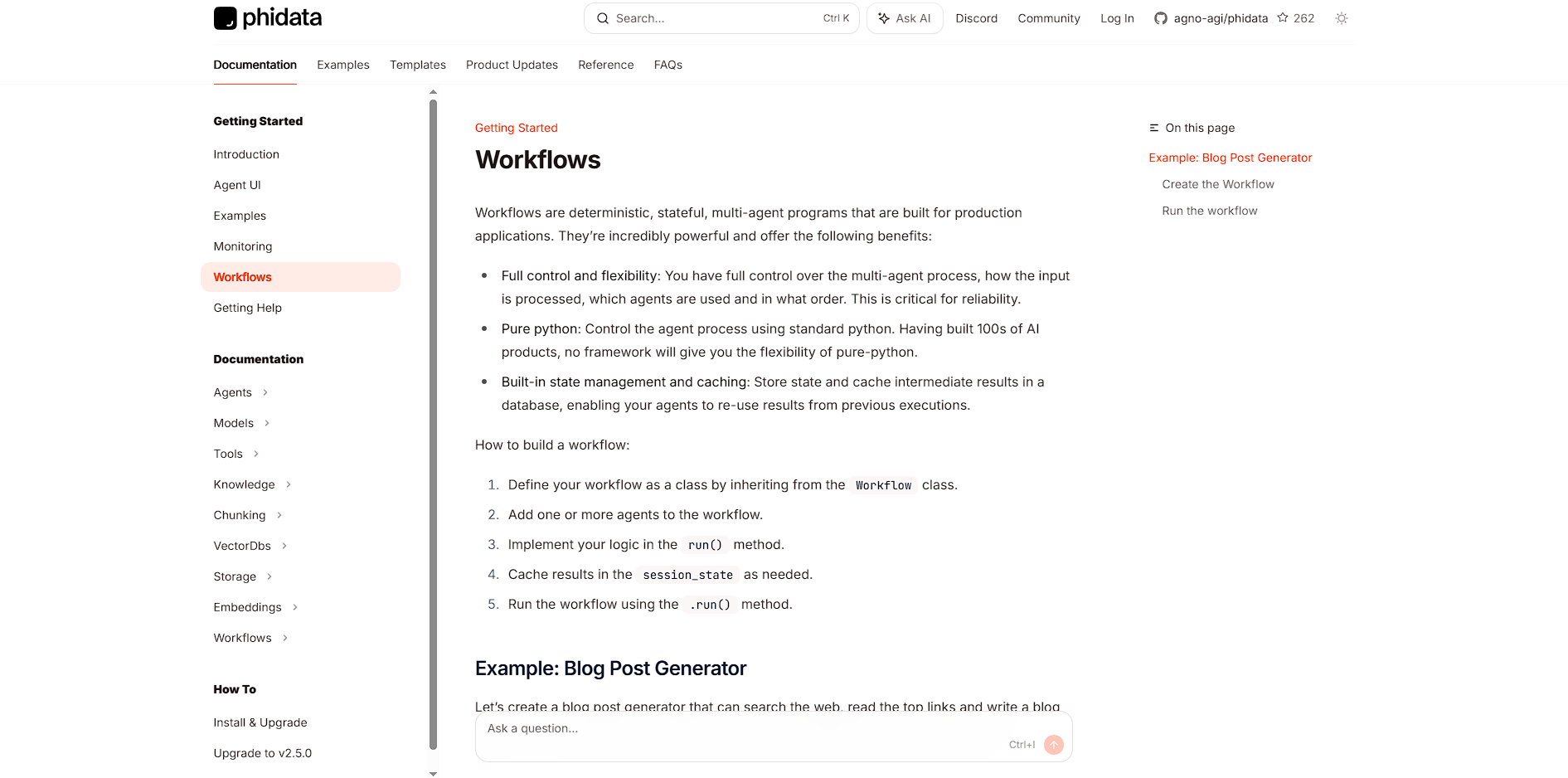
The framework is built around the concept of “agentic workflows,” where multiple agents can collaborate, execute tasks, and make decisions dynamically. Developers can create everything from simple assistants to complex multi-agent pipelines that handle tasks like research, automation, and data analysis.
Phidata also includes capabilities for deployment and scaling. It supports running agents locally or in the cloud, managing memory and sessions via databases, and monitoring performance over time. Its “application-as-code” approach allows developers to define entire AI systems as Python objects, making it easier to move from development to production.
Key Features and Benefits
Who Can Benefit from Phidata
Looking for alternative solutions?
Alternatives include LangChain, LangGraph, CrewAI, and AutoGen. These tools offer similar agent-building capabilities, often with larger ecosystems or simpler abstractions depending on your needs.

Phidata is an open-source AI agent framework designed to help developers build intelligent, autonomous systems powered by large language models. It provides a structured way to create agents that can reason, use tools, access knowledge, and maintain memory, turning LLMs into functional, goal-oriented systems rather than simple chat interfaces.
The framework is built around the concept of “agentic workflows,” where multiple agents can collaborate, execute tasks, and make decisions dynamically. Developers can create everything from simple assistants to complex multi-agent pipelines that handle tasks like research, automation, and data analysis.
Phidata also includes capabilities for deployment and scaling. It supports running agents locally or in the cloud, managing memory and sessions via databases, and monitoring performance over time. Its “application-as-code” approach allows developers to define entire AI systems as Python objects, making it easier to move from development to production.
Key Features and Benefits
Who Can Benefit from Phidata
Looking for alternative solutions?
Alternatives include LangChain, LangGraph, CrewAI, and AutoGen. These tools offer similar agent-building capabilities, often with larger ecosystems or simpler abstractions depending on your needs.

Learn what people say about Phidata
Be the first to share your experience and help others in the community.
Phidata is an open-source AI agent framework designed to help developers build intelligent, autonomous systems powered by large language models. It provides a structured way to create agents that can reason, use tools, access knowledge, and maintain memory, turning LLMs into functional, goal-oriented systems rather than simple chat interfaces.
The framework is built around the concept of “agentic workflows,” where multiple agents can collaborate, execute tasks, and make decisions dynamically. Developers can create everything from simple assistants to complex multi-agent pipelines that handle tasks like research, automation, and data analysis.
Phidata also includes capabilities for deployment and scaling. It supports running agents locally or in the cloud, managing memory and sessions via databases, and monitoring performance over time. Its “application-as-code” approach allows developers to define entire AI systems as Python objects, making it easier to move from development to production.
Key Features and Benefits
Who Can Benefit from Phidata
Looking for alternative solutions?
Alternatives include LangChain, LangGraph, CrewAI, and AutoGen. These tools offer similar agent-building capabilities, often with larger ecosystems or simpler abstractions depending on your needs.

Want to list your product on Subscribed.fyi? Create a profile to reach more buyers.